Drains do not clog overnight. They build up slowly, collecting grease, soap residue, hair, mineral scale, and organic debris layer by layer until the opening narrows enough to slow the flow or stop it entirely. By the time you notice a slow drain, the buildup has been accumulating for weeks or months.
By the time the drain backs up completely, the blockage is usually dense enough that a plunger cannot reach it and a store-bought chemical cannot dissolve it. Regular drain cleaning breaks that cycle by removing buildup before it reaches the point of failure, keeping your plumbing flowing and your repair bills low.
Lexington is the county seat of Lexington County and one of the fastest-growing communities in the Columbia metro area.
The Town of Lexington Utilities Department maintains the municipal water and sewer infrastructure, but the pipes inside your home and the service lines connecting your property to the municipal system are your responsibility. That means the drains in your kitchen, bathrooms, laundry room, and the main sewer line running from your house to the street are all on you to maintain.
Understanding the benefits of regular drain cleaning in Lexington matters because this area's combination of hard water, mature trees, sandy Sandhills soil, hot summers, and a housing stock that spans every decade from the 1950s to today creates conditions where drains deteriorate faster and clog more aggressively than they do in areas with softer water and milder climates.
An EPA factsheet on the national pretreatment program found that grease from homes, restaurants, and industrial sources is the most common cause of reported sewer blockages, responsible for 47 percent of all reported incidents. That statistic applies to residential kitchens just as much as it applies to commercial food service.
In this article, you will learn about:
- How regular drain cleaning prevents the most common and expensive plumbing failures
- The specific benefits for kitchens, bathrooms, sewer lines, and commercial properties
- What professional drain cleaning methods accomplish that DIY approaches cannot
- How often Lexington homes and businesses should schedule cleaning
- The cost comparison between routine maintenance and emergency drain service
Keep reading to find out why the cheapest plumbing work you will ever pay for is the work that prevents the emergency you never have to deal with.
How regular drain cleaning prevents the most expensive failures
The plumbing failures that cost the most are not the ones where a drain clogs and a plumber clears it. They are the ones where a clog causes a backup that floods a room, damages flooring and drywall, triggers mold growth inside wall cavities, or forces raw sewage into the house through floor drains and toilet bowls. Those cascading failures almost always begin with a drain that was partially blocked for weeks or months before the final failure.
Regular cleaning removes the buildup that leads to those cascading events. It is the plumbing equivalent of changing your car's oil: a small, predictable expense that prevents a large, unpredictable one.
Stopping grease and organic buildup before it hardens
Kitchen drains accumulate grease faster than any other drain in the house. Cooking oils, butter, bacon fat, salad dressing, and the greasy residue from washing pots and pans coat the interior walls of the drain pipe every time the sink runs. In warm conditions, the grease travels farther down the line before it cools and solidifies. In cooler months, it hardens closer to the drain opening.
Over time, the grease layer narrows the pipe's effective diameter and creates a sticky surface that catches food particles, coffee grounds, and other solids passing through. The result is a progressive blockage that restricts flow gradually until the drain either runs unacceptably slowly or stops entirely.
Regular professional cleaning removes the grease layer before it hardens and narrows the pipe. The difference in effort and cost between clearing soft buildup during a maintenance visit and breaking through a solidified grease plug during an emergency call is significant.
Habits that slow grease accumulation between professional cleanings:
- Pour cooled cooking oil and grease into a disposable container and throw it in the trash rather than rinsing it down the drain
- Scrape plates and cookware into the garbage before washing them in the sink
- Run cold water for 15 to 20 seconds after each garbage disposal use to flush particles completely through the drain line
- Use a monthly baking soda and vinegar flush to dissolve light grease film before it accumulates into a heavier coating
- Avoid pouring starchy water from pasta, rice, or potatoes directly down the drain, since starch gels as it cools and binds to grease
These habits reduce the rate of buildup between cleanings, but they do not eliminate it. Professional cleaning on a scheduled interval is what keeps the line fully clear.
Preventing root intrusion from gaining a foothold
Tree roots are one of the leading causes of main sewer line blockages in Lexington. The mature oaks, sweetgums, and maples that shade many neighborhoods send root systems deep into the soil in search of moisture and nutrients. A sewer line with even a hairline crack at a joint is broadcasting both, and roots will find it.
Once roots enter the pipe, they grow rapidly in the warm, nutrient-rich wastewater flowing through the line. A small root mass in spring can fill a significant portion of the pipe by fall. The growing roots catch grease, paper, and other debris, accelerating the blockage. Left unchecked, the root mass can crack the pipe open further or cause a full collapse.
Regular drain cleaning that includes the main sewer line catches root intrusion at the earliest stage, when the roots are small enough to clear with hydro jetting rather than mechanical excavation. A camera inspection after the cleaning confirms whether the pipe wall is still intact or whether the roots have caused damage that needs repair.
The EPA's SSO Frequent Questions page identifies tree roots entering through defects or openings in sewer lines as a primary cause of sanitary sewer overflows nationwide. Catching roots early through regular cleaning prevents your home from contributing to that statistic.
Protecting pipe longevity and avoiding premature replacement
Every clog puts stress on the pipe. The pressure behind a blockage pushes against joints, fittings, and the pipe wall itself. Repeated clogs in the same section of line fatigue the material over time, loosening joints in clay and cast iron pipes and stressing connections in PVC and ABS systems. Chemical drain cleaners compound the problem by corroding pipe walls from the inside, thinning the material and accelerating the very failures they are meant to prevent.
Regular professional cleaning removes blockages without the chemical damage and without the pressure buildup that stresses the pipe. Over the lifespan of a drain system, the difference adds up. Pipes that are cleaned regularly last longer, develop fewer joint leaks, and reach their full rated lifespan before replacement becomes necessary.
For Lexington homes with original pipes from the 1960s, 1970s, or 1980s, regular cleaning extends the service life of infrastructure that would cost thousands to repipe or replace. That makes maintenance one of the highest-return investments a homeowner can make in the plumbing system.
Specific benefits for kitchens, bathrooms, sewer lines, and commercial properties
Different drains face different threats. Kitchen drains fight grease. Bathroom drains fight hair and soap. Sewer lines fight roots and accumulated debris. Commercial properties face higher volumes and stricter regulatory requirements. Regular cleaning addresses each of these challenges on its own terms.
Kitchen drains stay clear through cooking season
Lexington's hot summers mean more outdoor cooking, more entertaining, and more kitchen volume than any other season. A kitchen drain that was borderline in March can fail completely by July when the extra grease, food waste, and dishwasher cycles push it past capacity.
A pre-summer cleaning ensures the kitchen drain enters the high-demand season fully clear. Combined with the daily habits listed earlier, a professional cleaning in late spring or early summer keeps the kitchen running all season without the stubborn clogs that disrupt meal prep and entertaining.
For households that cook frequently with oils and fats, a second cleaning in late fall clears anything the summer months deposited before it has a chance to harden over the winter.
Bathroom drains avoid the slow-drain spiral
Hair, soap scum, and personal care products combine inside bathroom drain pipes to form a dense, sticky mass that grows with every shower. The buildup is gradual. You might not notice a change in drain speed for months, but the pipe is narrowing steadily. By the time the drain runs noticeably slow, the blockage is usually well established and too far down the line for a surface-level DIY fix to reach.
Professional cleaning reaches the full length of the drain line, removing the accumulated mass before it reaches the critical stage. The result is a drain that runs at full speed rather than the gradually declining flow that most homeowners accept as normal.
Prevention steps between professional cleanings:
- Install mesh drain covers on every shower and tub drain to catch hair before it enters the pipe
- Clean drain covers after every use rather than waiting for visible buildup
- Flush each bathroom drain monthly with baking soda and vinegar followed by hot water
- Check pop-up stoppers in bathroom sinks for hair wrapped around the pivot rod, a common hidden source of slow drains
Sewer line cleaning prevents the most expensive single repair
The main sewer line carries all wastewater from the house to the municipal connection at the street. It is the single most expensive drain component to repair or replace because it runs underground across the full width of the yard. A sewer line that clogs and backs up can send raw sewage into the house, a health hazard and a repair bill that includes the plumbing work plus flooring, drywall, and mold remediation.
Regular sewer line cleaning, paired with periodic camera inspections, keeps the line clear and gives you advance warning of conditions that need repair before they cause a backup. The cleaning removes root intrusion, grease accumulation, and debris that settles in bellies or low spots. The camera inspection shows the structural condition of the pipe so you can plan any necessary repairs on your schedule.
For Lexington homes with mature trees near the sewer path, sewer line cleaning every one to two years is a cost-effective maintenance interval that catches problems while they are still manageable.
Commercial properties reduce liability and meet code requirements
Lexington's growing commercial corridor along Main Street, Highway 378, and the surrounding retail and restaurant districts creates specific drain cleaning needs for business owners. Restaurants in particular face strict requirements for grease trap maintenance and FOG control under local pretreatment ordinances.
Commercial drain cleaning benefits that protect business operations:
- Prevents drain backups that shut down kitchens, restrooms, and service areas during operating hours
- Maintains compliance with local grease trap cleaning requirements and pretreatment regulations
- Reduces the risk of slip-and-fall liability from overflowing drains on customer-facing floors
- Extends the life of commercial plumbing systems that handle higher daily volumes than residential systems
- Provides documentation of maintenance history that may be required during health inspections or lease renewals
For commercial properties in Lexington, a quarterly drain cleaning schedule is typical for restaurants and food service operations. Offices, retail, and other non-food commercial spaces can usually maintain on a semi-annual schedule.
What professional drain cleaning accomplishes that DIY cannot
Homeowner tools, including plungers, hand-crank snakes, and chemical cleaners, address the symptoms of a clog at the fixture level. They push material through or dissolve a small portion of the blockage near the drain opening. Professional drain cleaning addresses the entire pipe, from the fixture connection through to the main line or the municipal connection.
The difference is the difference between trimming the weeds in your yard and pulling them out by the roots.
Hydro jetting cleans the full pipe diameter
Hydro jetting uses a high-pressure water nozzle that scours the full interior circumference of the pipe as it moves through the line. The nozzle design directs water jets backward and to the sides, cutting through grease, scale, root masses, and debris and flushing everything downstream.
The key advantage of jetting over snaking is coverage. A snake punches a channel through the center of a blockage, restoring enough flow to clear the immediate backup but leaving the rest of the buildup clinging to the pipe walls. That remaining material narrows the pipe and seeds the next blockage. Jetting removes the entire buildup, restoring the pipe to near-original diameter.
Situations where hydro jetting is the right cleaning method:
- Kitchen drain lines with heavy grease coating that a snake cannot remove from the pipe walls
- Sewer lines with root intrusion that needs to be cut and flushed rather than just pushed aside
- Commercial drain lines that handle high daily volume and need full-diameter restoration
- Any drain that has been snaked multiple times but keeps clogging in the same section, indicating wall buildup rather than a new obstruction each time
After jetting, a camera inspection confirms the pipe is fully clear and reveals any structural damage that the buildup was hiding.
Camera inspections reveal what cleaning alone cannot
A drain can be flowing freely and still have a developing problem inside the pipe. A joint that has separated slightly, a section of pipe that is beginning to sag, a hairline crack that roots have not yet found, or internal corrosion that is thinning the pipe wall are all conditions that do not restrict flow yet but will cause failures eventually.
A camera inspection after cleaning gives you a clear, unobstructed view of the pipe interior, revealing:
- Joint condition, including separation, offset, and gasket deterioration
- Pipe wall condition, including corrosion, thinning, and scale accumulation
- Grade and alignment, showing bellies, sags, and channel wear that trap debris
- Root entry points that need sealing or repair before the next growing season
- Previous repair quality, including patches, liners, and connections that may be failing
This information lets you plan maintenance and repairs proactively rather than reactively. A plumber who sees a developing joint separation can recommend a targeted repair now, while the fix is simple, rather than waiting for the separation to become a full break that requires excavation or trenchless replacement.
Professional equipment reaches what homeowner tools miss
Homeowner drain snakes typically reach 15 to 25 feet into the line, which covers the branch drain from the fixture to the main stack but not the main sewer line running from the house to the street. That main line, which is often 40 to 80 feet long and buried 2 to 4 feet underground, is where the most consequential blockages form: root intrusions, heavy grease accumulation, and sediment deposits.
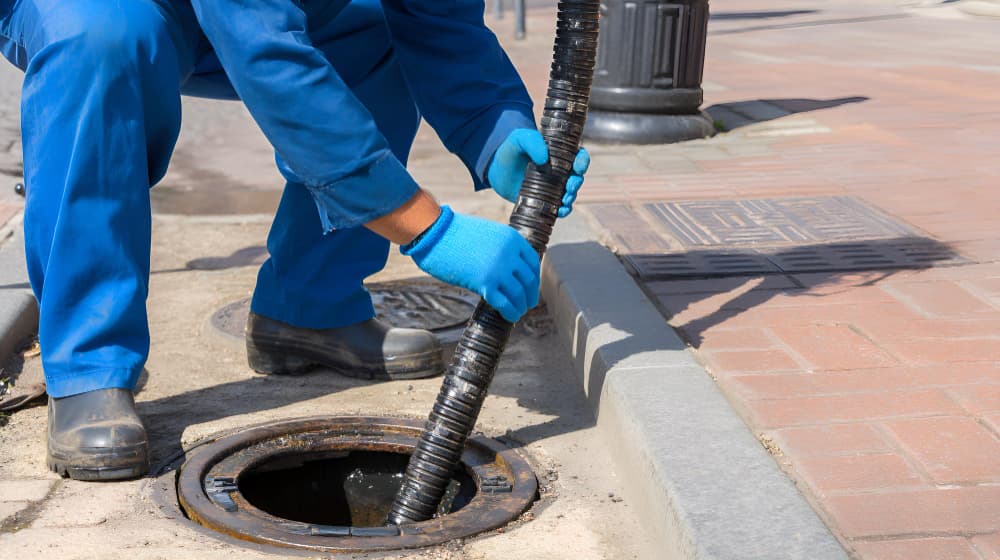
Professional drain cleaning equipment reaches the full length of the main line and delivers enough force to clear obstructions that a homeowner tool simply cannot touch. The difference in effectiveness between a $30 hand snake and a commercial hydro jetter is not incremental. It is categorical.
How often Lexington homes and businesses should schedule cleaning
The right cleaning interval depends on the property type, the age of the plumbing, the presence of risk factors like mature trees, and the usage patterns of the household or business.
Residential cleaning schedule
For most Lexington homes, the following schedule balances cost and protection:
- Kitchen drains: professional cleaning once per year, ideally in late spring before summer cooking season, supplemented by monthly DIY flushing with baking soda and vinegar
- Bathroom drains: professional cleaning once per year, timed with the kitchen cleaning for efficiency
- Main sewer line: professional hydro jetting and camera inspection every one to two years for homes with mature trees near the sewer path, every two to three years for homes without significant tree exposure
- All drains: run water through every drain in the house monthly, including unused guest bathrooms and floor drains, to keep trap seals full and prevent sewer gas entry
Homes with recurring clog issues, older cast iron drain stacks, or known root problems may need more frequent cleaning until the underlying cause is addressed.
Commercial cleaning schedule
Commercial properties in Lexington face higher usage and stricter regulatory standards:
- Restaurants and food service: quarterly drain and grease trap cleaning, with monthly grease trap service for high-volume kitchens
- Offices and retail: semi-annual drain cleaning for restroom and breakroom lines
- Multi-unit residential: annual cleaning of shared drain stacks and main sewer lines, with individual unit drain cleaning as needed
- Any commercial property with sewer backup history: increase frequency to quarterly until the root cause is identified and resolved
Signs you need to increase your cleaning frequency
Some homes and businesses need more frequent cleaning than the standard schedule. If you notice any of the following patterns, shorten the interval rather than waiting for the next scheduled visit:
- The same drain clogs two or more times within a six-month period despite professional cleaning
- Your sewer line camera inspection showed root entry points that have not been repaired
- Your kitchen handles heavy cooking volume daily, including deep frying, large-batch cooking, or frequent entertaining
- Your home has cast iron drain stacks that are more than 40 years old and developing internal scale
- A previous cleaning revealed significant grease or root mass, suggesting the line accumulated material faster than the current interval accounts for
A plumbing maintenance membership that includes scheduled cleanings at the appropriate interval automates the process and often includes priority scheduling and discounted rates for any additional work.
The cost comparison between routine maintenance and emergency service
The arithmetic of drain maintenance is simple. A scheduled annual cleaning for a typical Lexington home costs a fraction of what a single emergency drain clearing costs, and the emergency clearing does not include the secondary damage a backup causes.
Understanding where the money goes at each stage of neglect helps you see why the cheapest option is always the proactive one.
The escalation from maintenance to emergency to remediation
The cost of a drain problem does not increase linearly. It jumps in steps, and each step adds an entirely new category of expense.
- Annual professional drain cleaning as preventive maintenance: the baseline cost, typically the price of a standard service call plus the cleaning itself
- Emergency drain clearing after a backup: higher cost due to urgency pricing, after-hours availability, and the need for immediate response
- Emergency clearing plus floor damage: the drain clearing plus replacement of water-damaged flooring, baseboards, and any saturated drywall
- Emergency clearing plus mold remediation: the above plus professional mold treatment and removal of contaminated materials, which can multiply the total several times
- Sewer line replacement after a root-caused collapse: the most expensive outcome, potentially including excavation, new pipe, backfill, surface restoration, and landscaping repair
Every step on that escalation ladder was preventable with the step before it. Regular cleaning is the first and cheapest step.
What recurring clogs actually cost over time
Homeowners who clear the same drain repeatedly are spending more than they realize. Each service call has a direct cost, but the hidden costs add up faster. Water damage from partial backups accumulates between calls. Time lost waiting for emergency service disrupts work and family schedules. And the underlying condition, whether it is grease, roots, or a pipe defect, gets worse with each clearing rather than better.
For homeowners who have been dealing with recurring clogs or have not had their drains professionally cleaned in years, the first cleaning often reveals conditions that explain the recurring problems and gives the plumber the information needed to recommend a lasting fix.
How a maintenance plan changes the math
A structured maintenance plan converts unpredictable emergency expenses into predictable, budgetable costs. Instead of spending nothing for months and then paying a premium for urgent service, you spread the investment across the year at a lower per-visit rate.
Pairing regular cleaning with a comprehensive plumbing diagnostic creates a complete picture of the system's health and sets a baseline for future maintenance. Over five to ten years, the total spent on maintenance is almost always less than what a single major failure and its aftermath would have cost.
Conclusion
Regular drain cleaning is not a luxury for Lexington homes and businesses. It is the lowest-cost, highest-return maintenance activity in the entire plumbing system. It prevents grease buildup from hardening into blockages, catches root intrusion before it damages the pipe, extends the lifespan of aging drain infrastructure, and eliminates the conditions that lead to backups, flooding, mold, and five-figure repair bills.
The drains in your home are working right now, carrying wastewater out of sight and out of mind. They will keep working without complaint until the day they stop. Regular cleaning makes sure that day never comes, or at least pushes it as far into the future as possible.
If your Lexington home or business has not had a professional drain cleaning in the last year, or if you have been clearing the same slow drain repeatedly without a lasting fix, contact Dr. Rooter Lexington to schedule a cleaning and find out what your pipes look like on the inside. The answer will either confirm everything is running well or show you exactly what needs attention before it becomes a problem.