Underground leak detection lets homeowners locate a hidden water line leak without trenching across the lawn, tearing out landscaping, or breaking a driveway to search for the problem. Most underground leaks give only indirect clues, such as a rising water bill, a soggy patch of grass, or a meter that never stops moving.
Guessing at the location can mean digging several holes before finding the break, which adds cost and damage. Modern detection tools pinpoint the leak first, so the repair starts small and stays small.
In this article, you'll learn why underground leaks are so hard to find, which parts of your property's piping are most likely to fail, and how professional detection methods work. You'll also see what happens after a leak is located, how trenchless repairs protect your yard, and who is responsible for the line between the meter and your home. Finally, we'll cover habits that help you catch underground leaks early.
Here's what you need to know.
- Why are underground water leaks so hard to find on your own?
- How does underground leak detection find a leak without digging?
- What happens after the leak is pinpointed?
- How can you lower the risk of underground leaks and catch them early?
Keep reading to understand how accurate detection saves your yard, your water bill, and the cost of unnecessary excavation.
Underground leak detection is the process of locating leaks in buried water, irrigation, or sewer lines using non-invasive tools such as pressure testing, acoustic listening equipment, line locators, and tracer gas. The goal is to identify the point of the leak before excavation, so the repair can use a small, targeted opening.
Why are underground water leaks so hard to find on your own?
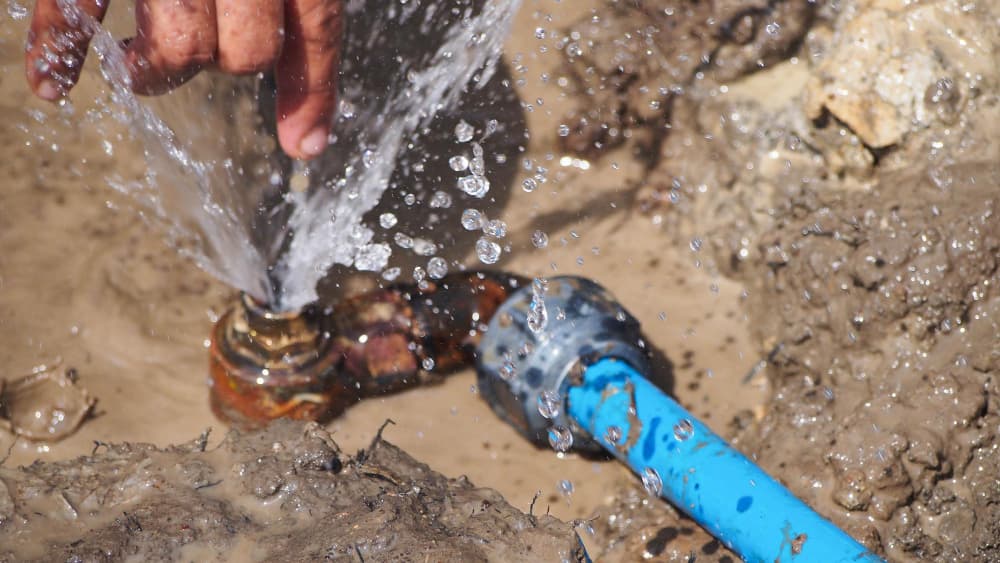
A buried water line can leak for weeks without any visible sign at the surface. The soil absorbs the water, carries it away from the break, and hides the source. By the time a wet spot appears, it may be several feet from the actual leak. That is why digging where the water shows up often leads to the wrong spot.
Many homeowners also do not know exactly where their lines run. Service lines, irrigation pipes, and sewer laterals may follow paths that were never documented or have been covered by decades of landscaping. Without a map or locating tools, finding a leak becomes guesswork. The sections below explain what hides these leaks and where they tend to occur.
Water takes the path of least resistance, not the shortest path to the surface.
When a pressurized line leaks underground, water flows through whatever gaps are easiest to travel. It may follow the gravel bedding around the pipe, drain downward through sandy soil, or spread sideways along a layer of clay. In parts of Lexington County with sandy soils, water can drain away so efficiently that the surface never looks wet. In heavier clay, water may pool and surface far from the break.
Hard surfaces make the problem harder to read. Driveways, sidewalks, and patios can trap water beneath them, pushing it out at the edges instead of directly above the leak. A leak under a driveway might show up as a damp strip along the lawn or a sunken section near a flower bed. Recognizing these patterns is part of why a trained leak detection service finds problems faster than trial-and-error digging.
Which parts of your property's piping are most likely to leak underground?
Every property has several buried lines, and each one has its own weak points. According to the Federal Energy Management Program, distribution system leaks are commonly caused by pipe corrosion, high pressure, construction disturbances, damaged joints, and ground shifting and settling. Its screening guidance calls for a full audit when verified uses account for less than 90% of supplied water. Residential service lines are smaller, but the same principle applies: unexplained flow needs investigation.
Use this checklist to understand the most common underground leak locations:
- Main water service line: The pipe from the meter to your home is under constant pressure, and older copper or galvanized lines can corrode along their full length.
- Irrigation lines and valves: Sprinkler systems have many fittings and shallow pipes, which makes them vulnerable to mower damage, freezing, and root pressure.
- Lines under driveways and walkways: Vehicle weight and settling concrete can stress pipes and crack joints over time.
- Pool and outdoor kitchen lines: Supply and return lines to outdoor features often run shallow and may have been added after original construction.
- Sewer laterals: The drain line from the house to the street can crack or separate at joints, allowing wastewater to leak into the soil.
Aging pipe material plays a major role in how often these lines fail. Pipe corrosion weakens metal service lines from the inside, and tree roots can crush or penetrate older pipe.
Construction and yard work also cause many leaks, since landscaping projects can strike or stress shallow lines. If you notice several of these risk factors on your property, a professional inspection is worth scheduling.
The warning signs of an underground leak often show up in your yard first.
Underground leaks rarely announce themselves directly, but they leave clues. A bill that rises without a change in household habits, soggy grass during dry weather, soil erosion, standing water near the meter box, or a system-wide pressure drop can all point to a buried break. Persistent low water pressure is especially important when it appears alongside an unexplained meter reading.
Paying attention to these signs helps you act before water damages the foundation or landscaping. No single symptom proves where the break is, so the pattern matters more than any one wet patch.
Some signs appear inside the home as well, such as the sound of running water when every fixture is off. Many hidden leak signs overlap, so it is easy to mistake an outdoor leak for an indoor one.
If the evidence points toward the foundation, slab leak detection may be needed instead of a yard search. A professional can separate these possibilities with isolation and pressure tests.
How does underground leak detection find a leak without digging?
Professional underground leak detection combines several tools, each suited to a different kind of pipe, soil, and leak. No single method works in every situation, so our technicians use them together to confirm and narrow the location. The process moves from broad confirmation to precise pinpointing. By the end, the goal is a marked spot on the ground where the repair should begin.
This approach saves time and money compared with exploratory digging. A well-executed search often locates the leak within a few feet or less. That accuracy protects your lawn, trees, hardscaping, and irrigation system. The sections below walk through how we find leaks from start to finish.
We start by confirming the leak and isolating the line.
Before searching the yard, we confirm that a leak exists and identify which line is losing water. EPA WaterSense guidance recommends comparing meter readings after water use has been stopped; its facility protocol uses a second reading 1 hour later. The same document flags unexplained losses above 10% for further investigation. At a home, the meter, shutoffs, and pressure test help isolate which line deserves a closer search.
A typical first visit follows these steps:
- We check the water meter with all fixtures off to confirm continuous flow.
- We close the main shutoff at the house to see whether the leak is on the service line or inside the home.
- We isolate irrigation and outdoor lines to rule them in or out.
- We pressure-test the suspected line to measure how quickly it loses pressure.
- We trace the pipe route so the next stage of detection follows the actual line.
These steps often cut the search area dramatically before any specialized equipment comes out. If the meter stops moving when the house shutoff is closed, the leak is inside, not underground. If it keeps moving, the service line becomes the focus. Careful plumbing diagnostics at this stage prevent wasted time later.
The technician can then select equipment for the actual pipe material and site conditions. That sequence keeps the search focused and reduces false leads from irrigation, fixtures, or neighboring drainage.
Acoustic listening equipment hears leaks through soil and concrete.
Water escaping from a pressurized pipe creates a distinct sound as it rushes through the opening and into the surrounding soil. Our technicians use ground microphones and amplified listening devices to pick up that sound from the surface. By moving the microphone along the pipe route, we listen for the point where the sound is loudest. That point typically marks the leak location.
Some equipment goes further by using correlators, which place sensors at two points on the line and measure the time it takes for leak noise to reach each one. The difference in timing helps calculate the leak's position between the sensors.
Acoustic methods work especially well on metal pipes, which carry sound efficiently. Techniques used for professional leak detection rely on this equipment because it locates leaks without disturbing the ground.
Tracer gas and line locating fill the gaps when sound isn't enough.
Not every leak is loud enough to hear. Plastic pipes such as PVC and PEX carry sound poorly, and very small leaks or deeply buried lines may be quiet at the surface. In these cases, technicians may introduce a suitable tracer gas into an isolated line, then use a sensitive detector to find where it reaches the surface.
A copper service line with a steady leak may respond well to acoustic equipment, while a quiet plastic line may require tracer gas. When the route is unknown, electronic line locating comes first. Under concrete or pavers, technicians may combine methods before any surface is cut.
Line locating is often the step that makes everything else possible. Once the pipe route is marked, acoustic and tracer gas methods can follow it precisely. Similar tools help locate leaks under concrete such as driveways and patios.
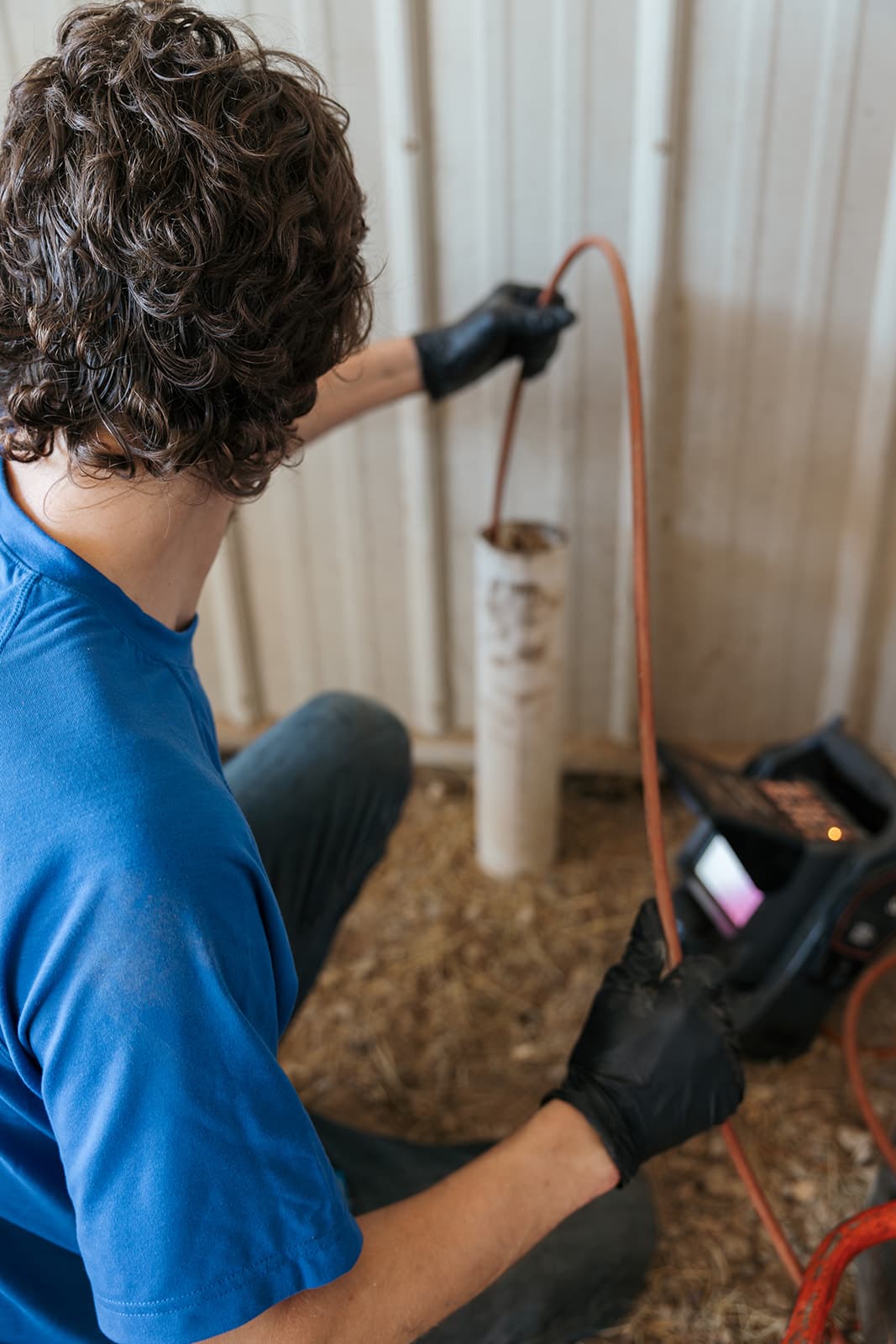
For sewer laterals, a sewer camera inspection shows cracks and separated joints from inside the pipe.
What happens after the leak is pinpointed?
Once the leak is located, the repair can be planned around a specific spot rather than an entire yard. That precision changes the scope, cost, and disruption of the job. In many cases, only a small opening is needed to reach the damaged pipe. When the whole line is failing, trenchless options can replace it with minimal surface damage.
The repair method depends on the pipe's material, age, and condition. A single break on sound pipe may need only a short section replacement. A corroded line with multiple weak points may be better replaced entirely. The sections below explain the options and who is responsible for the work.
A small, targeted excavation replaces a torn-up yard.
With the leak marked, crews can dig a small access hole, often just a few feet across, directly above the break. The damaged section is cut out and replaced, the line is pressure-tested, and the soil is backfilled and compacted. Sod or landscaping can usually be restored with little visible trace. This approach is far less disruptive than trenching the entire line.
Any digging, even a small hole, requires locating other buried utilities first. SC811 tells property owners to submit a locate request at least 3 business days before digging, excluding weekends and holidays. The service notifies participating utility operators so they can mark public lines. The person or company performing the excavation should confirm that the required responses are complete before work begins.
Trenchless options can replace a failing line without trenching.
When the service line or sewer lateral is corroded, cracked in several places, or near the end of its life, replacing it may make more sense than repairing one spot. Trenchless methods install new pipe with only small access pits at each end. Techniques include pipe bursting, which pulls new pipe through the old line while breaking it apart, and directional boring for new water lines. Modern trenchless replacement protects driveways, trees, and landscaping.
The main advantage is reduced surface damage. Small access pits can protect lawns, driveways, walkways, and mature trees while limiting the amount of restoration after the new pipe is installed. Replacing the full run can also resolve leak risk along a line with several weak sections.
The tradeoff is that trenchless replacement has a broader scope than repairing one break and requires specialized equipment. It is not suitable for every soil condition or pipe layout, and a collapsed or severely offset line may still require partial excavation.
For sewer laterals, no-dig sewer replacement offers similar surface-protection benefits for drain lines.
When roots are the cause, addressing root intrusion during the repair prevents a repeat failure. Your plumber should explain whether a spot repair or full replacement gives better value based on camera and detection findings.
Who pays for an underground leak, you or the water utility?
Responsibility for buried water lines usually depends on which side of the meter the leak is on. In most Lexington-area water systems, the utility owns and maintains the meter and the line leading to it from the street. The homeowner is typically responsible for the service line from the meter to the house, along with irrigation and other private lines. Confirming the leak's location tells you who should handle the repair.
If the leak is on the utility's side, contact your water provider directly, since they will repair it at no cost to you. If it is on your side, the repair is your responsibility, but some utilities offer bill adjustments once a leak is fixed and documented.
Keep receipts and your plumber's report to support that request. Knowing the signs your line needs water line repair helps you act before a small leak becomes a costly one.
How can you lower the risk of underground leaks and catch them early?
Underground leaks are easier and less expensive to fix when they are caught early. A small leak found in its first weeks usually means a quick repair and minimal water loss. Waiting allows water to erode soil, raise bills, and damage landscaping or foundations. A few simple habits make early detection much more likely.
Prevention also plays a role. Managing water pressure, protecting shallow lines during yard work, and replacing aging pipe before it fails all reduce risk. These steps cost far less than emergency repairs. The sections below cover practical habits, common questions, and the value of professional detection.
A few habits help you spot trouble before your bill spikes.
Most homeowners check their water bill only when it arrives, which can mean a month or more of hidden water loss. Building simple checks into your routine closes that gap. These habits take only minutes and require no special tools. They work for both underground and indoor leaks.
- Check your water meter once a month with all fixtures off, and note whether the leak indicator moves.
- Compare each water bill to the same month last year to spot unusual increases.
- Walk your yard after dry spells and look for soggy spots, green patches, or sinking soil.
- Test your irrigation system at the start of each season and watch for pooling or weak zones.
- Call SC811 before any digging project so crews can mark your lines and avoid damaging them.
Some homeowners go a step further with a smart flow meter that sends alerts when water use looks abnormal.
Older properties may also benefit from early detection when bills or meter readings change.
Reducing outdoor water waste during hot summers makes unusual usage easier to spot. Together, these steps turn a hidden problem into an early warning.
What do homeowners ask most about underground leak detection?
Homeowners often have similar questions when they suspect a buried leak. Most want to know how accurate detection is, how long it takes, and whether the yard will be damaged. Clear answers make it easier to decide when to call. These are the questions we hear most often.
How accurate is professional underground leak detection?
With the right combination of tools, leaks are often located within a few feet or less. That accuracy keeps any excavation small and targeted.
Will you need to dig up my yard to find the leak?
No, detection itself is non-invasive and uses sound, gas, pressure, and signal tracing from the surface. Digging only happens at the repair spot once the leak is confirmed.
How long does underground leak detection take?
Most residential searches are completed in a single visit of a few hours. Complex properties with long or unmapped lines may take longer.
Can you find leaks in irrigation and sewer lines too?
Yes, irrigation lines can be isolated and tested like supply lines, and sewer laterals are inspected with cameras. Each system uses methods suited to its pipe and pressure.
Why professional detection saves money over trial-and-error digging.
Digging to find a leak without detection often means multiple holes, damaged landscaping, and hours of labor before the break is found. Each exploratory hole also risks striking other utilities or irrigation lines. Professional detection costs far less than that guesswork in most cases. It also shortens the time water keeps leaking.
Accurate detection sets up the right repair from the start. Once the leak is located, a plumber can recommend water pipe repair for a single break or replacement for a failing line.
Periodic pipeline inspection helps older properties stay ahead of new failures.
Combined with routine plumbing maintenance, detection keeps your system reliable and your yard intact.
Conclusion
Underground leaks are hard to find because soil, hard surfaces, and unmapped pipe routes hide the source of the water. Guesswork digging often leads to multiple holes, damaged landscaping, and continued water loss. Professional detection replaces that guesswork with pressure testing, acoustic listening, line locating, and tracer gas. The result is a precise location and a repair that starts small.
Once the leak is pinpointed, the repair can match the problem. A single break may need only a small, targeted excavation, while a failing line can often be replaced with trenchless methods that protect your yard. Knowing which side of the meter the leak is on clarifies who handles the repair. Simple habits such as monthly meter checks and calling SC811 before digging help keep future leaks small.
A licensed plumber with the right detection tools can confirm whether you have an underground leak, locate it accurately, and explain your repair options clearly. That approach protects your lawn, your foundation, and your water bill at the same time. Early action also limits soil erosion and landscape damage around the leak.
If your meter keeps moving or your yard shows unexplained wet spots, contact Dr. Rooter of Lexington to schedule leak detection with licensed local plumbers.