Trenchless sewer line repair has changed what Lexington, SC homeowners can expect when a damaged sewer line needs attention, since it's no longer automatic that fixing the problem means digging up the yard.
In this article, you will learn how trenchless methods actually work, how they compare with traditional excavation on cost and timeline, and how to figure out which approach fits your specific situation.
Here's what you need to know.
Keep reading to see which method actually fits your specific sewer line problem.
Trenchless Sewer Line Repair Lexington SC refers to methods like pipe bursting and cured-in-place pipe lining that repair or replace damaged sewer lines through small access points, such as manholes, rather than digging a trench along the pipe's entire length.
The core difference comes down to how much of the yard, driveway, or landscaping has to be disturbed to reach and fix the damaged pipe.
Trenchless methods, including pipe bursting and cured-in-place pipe lining, use small access points to repair or replace a damaged sewer line without digging a continuous trench along its length.
According to an Environmental Protection Agency fact sheet, trenchless sewer rehabilitation techniques generally provide a way to correct pipe deficiencies with less disturbance, economic impact, and environmental degradation than the traditional dig-and-replace method.
That reduced disturbance is the main reason trenchless methods have become so popular for residential sewer repair.
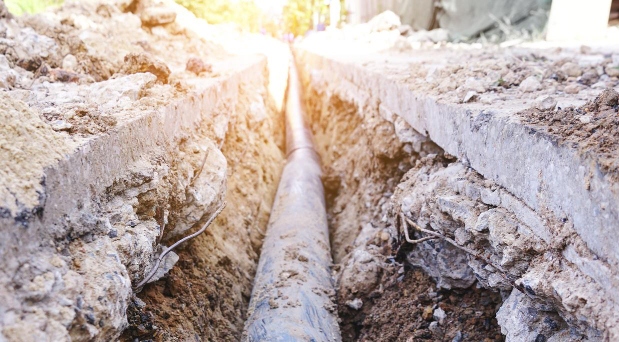
Traditional repair requires excavating a trench along the length of the damaged pipe, removing the old section, installing new pipe, and then restoring the disturbed area afterward.
Homeowners noticing residential repiping signs throughout their home's plumbing may find that a sewer line issue is part of a broader pattern worth evaluating together.
This approach remains necessary for certain conditions that trenchless methods cannot address.
What homeowners can expect based on the repair method chosen:
Whether trenchless is the better choice depends on the property's layout, the pipe's condition, and how much disruption a homeowner is willing to accept.
Because trenchless methods work through existing access points rather than a continuous trench, they leave most of the yard completely undisturbed during the repair.
Homeowners researching whether trenchless sewer replacement makes sense for their property often cite this reduced disruption as the deciding factor over traditional excavation.
That difference matters most for properties with mature landscaping, hardscaping, or limited yard space.
What trenchless repair typically preserves:
Certain conditions, such as severely collapsed pipes or sewer lines that have shifted significantly out of alignment, may require the direct access that only traditional excavation can provide.
Reviewing sewer repair warning signs early gives homeowners a better chance of catching problems before they progress to the point where trenchless methods are no longer an option.
A professional evaluation is the only reliable way to confirm which approach actually applies to a specific pipe's condition.
Cost depends on the extent of damage, the length of pipe affected, and the specific trenchless method used.
Pipe diameter, length of the damaged section, and the number of access points needed all influence the total project cost.
Homeowners evaluating this alongside broader repiping cost factors can get a clearer sense of how sewer line repair costs compare with other plumbing investments in the home.
Getting a detailed, itemized estimate helps homeowners understand exactly what's driving their specific quote.
Weighing trenchless against traditional excavation costs:
Where trenchless often costs less overall
Where traditional excavation may cost less upfront
Traditional excavation often costs less to perform initially, but the expense of restoring landscaping, driveways, or walkways afterward can close much of that gap.
Homeowners exploring trenchless pipe replacement options should factor in this full restoration cost when comparing quotes, rather than looking at the excavation price alone.
A fair cost comparison always accounts for the total project, not just the repair itself.
Timeline is one of the most noticeable practical differences between trenchless and traditional methods.
Many trenchless repairs can be completed in a single day, depending on the length and condition of the damaged pipe section.
Municipal case studies, such as one documented by the City of Columbus, describe cured-in-place pipe rehabilitation as offering reduced construction time compared with traditional open-cut excavation, alongside less disruption to residents and reduced loss of trees.
That faster completion is part of why trenchless methods are often preferred for occupied residential properties.
Traditional excavation requires digging the trench, removing and replacing the pipe, backfilling, and then restoring the surface, each of which adds time to the overall project.
Reviewing sewer pipe repair methods in more detail can help homeowners understand exactly which steps in a traditional repair contribute most to the longer timeline.
Weather conditions and soil type can also extend a traditional excavation project beyond its initial estimate.
Access and timeline questions homeowners ask:
Does a sewer camera inspection affect how long a repair takes? Yes, a sewer camera inspection upfront helps technicians plan the repair precisely, which can actually shorten the overall project timeline.
Can difficult access points slow down a trenchless repair? Yes, if the existing access points are hard to reach or require additional preparation, the timeline can extend beyond a typical single-day repair.
Does pipe depth affect repair time for either method? Yes, deeper pipes generally take longer to access and repair, regardless of which method is used.
Should homeowners expect delays if multiple sewer line issues are found? Possibly, since additional damage discovered during the repair may require adjusting the scope and timeline.
Trenchless methods can address a wide range of common sewer line issues, though not every situation qualifies.
Cracks, small breaks, and general deterioration are among the most common issues trenchless methods like cured-in-place pipe lining are designed to address.
Reviewing common pipe corrosion warning signs can help homeowners catch this kind of damage early, while trenchless repair is still a viable and cost-effective option.
Catching cracks and corrosion before they progress significantly improves the range of repair options available.
Tree roots are one of the most common causes of sewer line damage, entering through small cracks or joints and gradually expanding those openings over time.
The Environmental Protection Agency notes that tree roots entering through defects or openings in a sewer line are a common cause of blockages nationwide, contributing to a sewer infrastructure system the agency estimates is worth more than $1 trillion.
Homeowners dealing with recurring tree root damage often find that trenchless repair resolves the immediate blockage while addressing the underlying pipe defect that allowed the roots to enter in the first place.
A checklist for determining whether repair or replacement is needed:
The right method depends on details that are difficult to determine without a direct inspection of the pipe itself.
A camera inspection allows a technician to see the exact condition, location, and extent of damage inside the pipe before recommending a repair method.
A pipe camera inspection removes much of the guesswork from diagnosing sewer line problems, replacing assumptions with a direct, visual assessment.
This step is typically the starting point for any serious sewer line evaluation, regardless of which repair method ultimately gets chosen.
A pipe with isolated cracks in an easily accessible location is a strong candidate for trenchless repair, while a severely damaged section under a structure may require a different approach entirely.
Ongoing sewer line inspection service visits can help homeowners catch developing issues while trenchless options are still on the table, rather than waiting until damage has progressed further.
Both the pipe's physical condition and its location under the property play a role in determining which methods are realistically available.
Steps to determine the right repair approach for your property:
Traditional excavation remains the right choice in certain situations, despite the disruption it causes.
Severely damaged, collapsed, or misaligned pipe sections sometimes cannot be addressed through trenchless methods and require direct excavation to fully resolve the problem.
Homeowners dealing with a persistent sewer line clog repair issue that keeps recurring despite previous attempts may eventually need this more direct approach to fully resolve the underlying cause.
Excavation gives technicians complete, unobstructed access to diagnose and fix problems that trenchless tools cannot reach effectively.
A pipe that has fully collapsed or shifted significantly cannot support the trenchless methods that rely on the existing pipe as a guide or host.
Reviewing main sewer line repair signs early gives homeowners the best chance of catching a problem before it progresses to the point where only traditional replacement remains an option.
Early detection genuinely expands the range of repair options available later.
Direct excavation gives technicians the ability to inspect, adjust, and repair every aspect of a damaged section, which is valuable when multiple issues are present at once.
While trenchless sewer contractors often recommend trenchless methods as a first option, they should also be upfront about situations where direct excavation is genuinely the more reliable choice.
A trustworthy contractor recommends the method that actually fits the problem, not the one that's easiest to sell.
A few practical factors help homeowners make a confident, informed decision between trenchless and traditional repair.
Both trenchless and traditional repairs, when done correctly, can offer decades of reliable service, though the specific materials and methods used affect the exact expected lifespan.
Comparing this against broader water pipe repair solutions throughout the home can help homeowners think about sewer line repair as part of their property's overall plumbing health, rather than an isolated decision.
Asking directly about expected service life for the specific method proposed is a reasonable question during any consultation.
Warranty coverage varies significantly between contractors and repair methods, making it an important detail to clarify before work begins.
Reviewing a affordable plumbing company guide can help homeowners understand what questions to ask about pricing and warranty coverage together, rather than evaluating cost in isolation.
A contractor confident in their work should be willing to stand behind it with clear, specific warranty terms.
Ultimately, the right repair method depends on a direct, professional assessment of the specific pipe, its condition, and the property's layout, not a general rule that applies to every situation.
Tips for hiring plumbing contractors can help homeowners choose a company experienced in both trenchless and traditional methods, rather than one that only offers a single approach regardless of the problem.
A contractor who evaluates the specific situation, rather than defaulting to one method, is far more likely to recommend the repair that actually fits the problem.
Trenchless and traditional sewer line repair each have a place, and the right choice for a Lexington, SC home depends on the pipe's condition, its location, and how much disruption a homeowner is willing to accept. A camera inspection is almost always the right starting point, since it replaces guesswork with a clear picture of what's actually happening underground. If you're dealing with a sewer line issue and aren't sure which repair method fits your situation, contact Dr. Rooter Lexington for a professional inspection and recommendation.