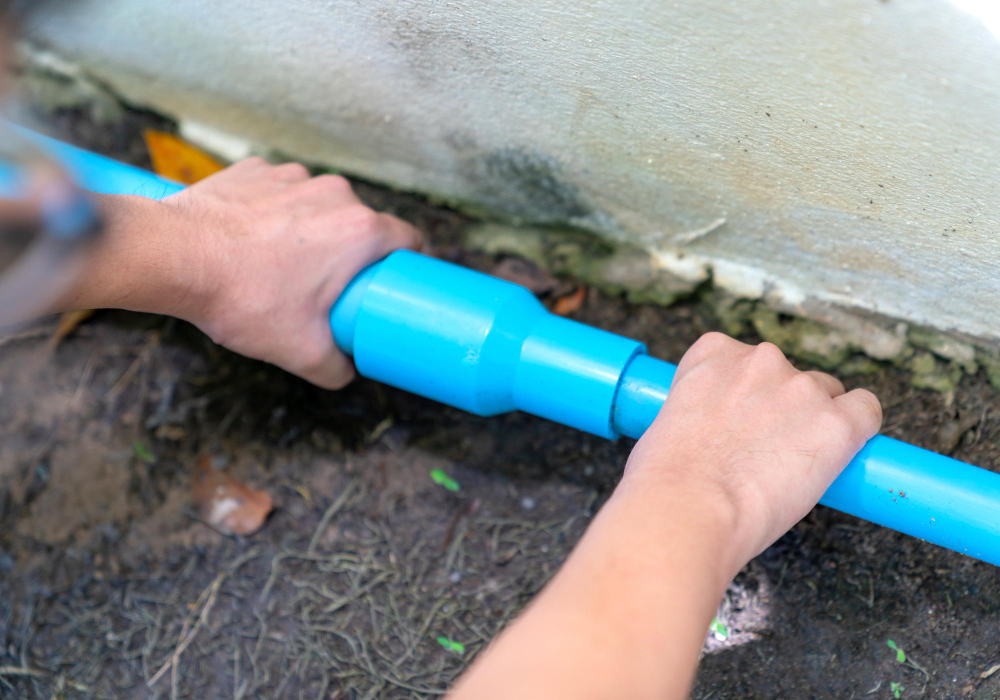
Your water line runs underground from the municipal connection at the street to the point where it enters your home. In Gilbert, SC, that buried pipe carries every drop of water your household uses, and most homeowners never think about it until something goes wrong. Recognizing the signs your water line needs repair in Gilbert early is the difference between a manageable fix and a flooded yard, a damaged foundation, or a water bill that makes no sense.
Gilbert sits in the heart of Lexington County, a small town with a rural feel, older homes near Main Street, and newer developments spreading outward toward Lake Murray and the surrounding countryside. Both older and newer properties face water line risks, but for different reasons.
Homes built decades ago may still have original galvanized steel or polybutylene pipes that have reached the end of their useful life. Newer homes can develop problems from poor installation, shifting soil, or root intrusion from the mature trees that line many Gilbert properties.
The EPA's Water Finance Center reports that approximately 240,000 water main breaks occur every year across the United States, costing roughly $2.6 billion in repairs. Those breaks happen in residential service lines too, not just municipal mains.
And in a community like Gilbert, where sandy Sandhills soil and seasonal temperature swings put extra stress on buried pipes, catching the warning signs early matters even more.
In this article, you will learn about:
Keep reading to find out what your plumbing is trying to tell you and how to act on it before a small leak becomes a serious problem.
Water pressure changes are usually the first thing a homeowner notices when a water line starts to fail. The shift can be subtle at first, a shower that feels slightly weaker, a garden hose that does not spray as far, or a washing machine that takes longer to fill. These are not random inconveniences. They are signals that something is restricting the flow of water between the street and your house.
Pressure problems tend to worsen gradually, which makes them easy to dismiss. But a water line that is losing pressure today is a water line that may fail completely next month, and a full break underground is far more expensive and disruptive than a repair caught early.
When water pressure drops across the entire house rather than at a single fixture, the issue is almost always in the main water line rather than in an individual pipe or faucet. A slow decline over weeks or months typically points to one of a few causes.
Internal corrosion is common in older galvanized steel pipes. As the pipe corrodes from the inside out, rust and mineral scale accumulate along the interior walls and narrow the opening that water flows through. The result is a gradual loss of volume and pressure that gets worse over time. Homes in Gilbert that were built before the mid-1980s and still have original galvanized lines are especially vulnerable.
Partial blockages from sediment or mineral deposits work the same way. The sandy aquifer water in the Sandhills region carries dissolved minerals that can settle inside pipes, particularly at bends, joints, and fittings where flow slows down. If your water filtration system has not been serviced recently, the filter itself may also be restricting flow.
A small leak in the line can cause pressure drops too. Even a pinhole leak loses enough water to reduce the pressure at your fixtures, especially during peak demand when multiple fixtures run at once.
A sudden loss of water pressure, or a complete loss of water, is a more urgent warning sign. Check with your neighbors first to rule out a municipal issue. If their water is running normally and yours is not, the problem is in your service line between the meter and the house.
Common causes of sudden pressure loss include:
If you lose water pressure suddenly and cannot identify a simple cause like a closed valve, treat it as an emergency. Standing water underground can erode your foundation, saturate your crawl space, or undermine your driveway within hours depending on how fast the leak is flowing. An emergency plumber can locate and isolate the break before the damage spreads.
Intermittent pressure changes, strong one moment and weak the next, often point to a pipe that has cracked but not fully separated. As the ground around the pipe shifts with temperature and moisture, the crack opens and closes, changing how much water gets through.
This pattern is especially common during South Carolina's transition seasons when daytime temperatures in the 80s and 90s give way to cooler nights. The repeated expansion and contraction of the soil and the pipe material can work a hairline crack into a significant split over a single season.
Fluctuating pressure can also indicate a failing pressure regulator valve if your home has one installed. A plumber can test the regulator quickly and determine whether the inconsistency is coming from inside the house or from the buried water line.
Not every water line problem announces itself through pressure changes. Some of the most telling signs show up where you can see them, if you know what to look for. A leak in a buried water line pushes water to the surface over time, and that moisture leaves marks both outdoors and inside the house.
These visible clues are especially important because they often appear before a homeowner notices a pressure change. A small, steady leak might not reduce pressure enough to feel at the faucet, but it will absolutely show up in your water bill, in your yard, or in your crawl space.
A patch of grass that stays greener and grows faster than the rest of the lawn, especially during a dry spell, is a classic sign of a water line leak. The escaping water feeds the root zone directly, creating a strip or circle of vigorous growth that stands out against the surrounding turf.
In more advanced leaks, you may see standing water or a muddy soft spot in the yard even when it has not rained. If the leak is large enough, the ground above the pipe may actually sink or become spongy underfoot as water washes away the sandy soil that supports the surface.
The USDA's soil surveys for Lexington County confirm that much of the area, particularly in the Sandhills zone that runs through Gilbert, has sandy, well-drained soils. That drainage characteristic means water from a leak travels faster and farther underground before surfacing, which can make it harder to pinpoint the exact break location without professional leak detection equipment.
Pay attention to the area between your home and the water meter at the street. That is the path your service line follows, and any unexplained moisture along that route is worth investigating.
If your home has a crawl space, check it periodically for signs of moisture, standing water, or water stains on the foundation walls and floor joists. A water line that leaks near or under the foundation can saturate the soil beneath the house and push water into the crawl space long before the leak shows up in the yard.
Warning signs to look for include:
A crawl space leak is particularly damaging in Gilbert's warm, humid summers. The combination of moisture and heat creates ideal conditions for mold growth and wood rot, both of which can compromise the structural integrity of your floor system. Catching a hidden water leak before it saturates the crawl space saves thousands in remediation costs.
Slab-foundation homes face a different version of the same problem. A leak under the slab can cause slab leak damage that warps flooring, cracks tile, and creates damp spots that seem to appear from nowhere.
Your water bill is one of the most reliable early warning systems for a hidden leak. If your usage has not changed but your bill has jumped noticeably, water is leaving the system somewhere between the meter and your fixtures.
The EPA estimates that the average household's leaks can waste more than 9,300 gallons of water every year, and 9 percent of homes have leaks that waste 50 gallons or more per day. A cracked water line loses water constantly, 24 hours a day, and the volume adds up fast. A moderate leak can waste hundreds of gallons daily without producing any visible sign inside the house.
To check for a hidden leak, turn off every water-using fixture and appliance in the house, then watch your water meter for 15 to 20 minutes. If the meter continues to move with everything shut off, water is escaping somewhere in the line. That is your signal to call for a professional plumbing diagnostic before the leak gets worse.
Understanding why water lines fail helps you assess the risk to your own property. Some causes are universal, affecting homes everywhere. Others are directly tied to the soil, climate, and building history of the Lexington County area and the Sandhills region that runs through Gilbert.
Knowing which risk factors apply to your home helps you prioritize inspections and make informed decisions about repair versus replacement before a failure forces your hand.
The material your water line is made of determines how long it will last and how it will eventually fail. Each generation of residential construction used different pipe materials, and each has its own lifespan and failure pattern.
If your home still has its original water line and was built before the mid-1990s, scheduling a pipe inspection is a smart precaution, even if nothing seems wrong yet.
Gilbert sits in the Sandhills, a band of sandy, well-drained soil that stretches diagonally across South Carolina through Lexington and Richland Counties. That sandy composition shifts more easily than clay-heavy soils, especially after heavy summer downpours saturate the ground and then dry spells pull the moisture back out.
Repeated wet-dry cycles cause the soil around a buried pipe to expand and contract, putting mechanical stress on joints and fittings. Over years of this movement, even a well-installed line can develop separations at connection points or cracks along the pipe body.
Tree root intrusion compounds the problem. Roots seek moisture, and a water line with even a minor seep at a joint is a magnet. Once roots reach the pipe, they can wrap around it, infiltrate cracks, and eventually crush or split the line entirely. Mature oaks, sweetgums, and maples common in Gilbert neighborhoods are especially aggressive.
A sewer camera inspection adapted for water line diagnostics can reveal root intrusion and joint separation before they cause a full break.
Soil corrosivity is one of the leading causes of underground pipe failure nationwide. According to a comprehensive study from Utah State University, nearly 75 percent of water utilities operate in areas with corrosive soil conditions, and corrosion ranks as the second-highest cause of water main breaks in the country.
The Sandhills soils in the Gilbert area, while well-drained, contain varying levels of acidity and mineral content that can attack metal pipes over decades. Galvanized steel and copper are both susceptible. The effect is slow but cumulative, weakening the pipe wall until it eventually leaks or breaks.
Water chemistry plays a role from the inside too. Treated municipal water contains disinfectants that, while safe to drink, can degrade certain pipe materials over time. Polybutylene is the most notable example, but even copper develops pinhole leaks faster in water with aggressive chemical characteristics.
Once you have confirmed that your water line has a problem, the next decision is whether to repair the damaged section or replace the entire line. The right answer depends on the pipe material, the extent of the damage, the age of the line, and how much useful life remains in the rest of the pipe.
A targeted repair is usually appropriate when the damage is isolated, the rest of the pipe is in good condition, and the material has years of remaining service life. A full replacement makes more sense when the line is old enough that fixing one spot just moves the next failure to another section.
If a single section of an otherwise healthy water line has failed, a spot repair can restore full function at a fraction of the cost of a complete replacement. This approach works best when the damage was caused by an external event, like root intrusion at one joint, a rock impact during nearby construction, or a frost-related crack at a shallow section.
The repair process typically involves:
For small, accessible breaks, some plumbers can complete the work in a single day. The key factor is whether the rest of the pipe is structurally sound. If the plumber finds additional corrosion, scale, or deterioration during the repair, that changes the recommendation.
A professional who handles pipe repair and replacement in the Lexington area can assess the overall condition of the line during the repair and give you an honest evaluation of how much life remains.
When the pipe material has reached the end of its expected lifespan, or when multiple sections show signs of deterioration, repairing one spot is a temporary fix at best. The same conditions that caused the first failure, corrosion, material degradation, or chronic soil stress, are working on the rest of the line too.
Full water line replacement involves running a new pipe from the meter connection to the house. Modern replacements typically use PEX or HDPE, both of which resist corrosion, handle soil movement better than rigid materials, and have expected service lives that exceed 50 years.
The cost is higher than a spot repair, but replacing a failing line eliminates the cycle of recurring leaks and emergency calls that drain money over time. For Gilbert homeowners with galvanized or polybutylene lines, a whole-home repiping project that includes the water service line is often the most cost-effective long-term decision.
EPA's most recent Drinking Water Infrastructure Needs Survey estimated that the nation requires $625 billion in water infrastructure investment over the next 20 years, with approximately 67 percent of that need tied to pipe replacement and rehabilitation. The same aging that affects municipal systems affects residential service lines, and the same logic applies: replacing old pipe before it fails catastrophically costs less than cleaning up after it does.
Traditional water line replacement requires digging a trench from the meter to the house, which can tear up landscaping, driveways, and walkways. For homeowners who want to avoid that level of disruption, trenchless methods offer an alternative.
Pipe bursting is the most common trenchless technique for water line replacement. A hydraulic head pulls a new pipe through the path of the old one, breaking the old pipe apart as it goes. The result is a new, continuous water line installed through the same underground route with only two small access pits rather than a full-length trench.
Not every property is a candidate for trenchless replacement. The method works best when the existing pipe follows a relatively straight path without sharp bends, and when the soil conditions allow the bursting head to move smoothly. A plumber experienced in trenchless pipe methods can evaluate your property and recommend whether traditional or trenchless is the better fit.
For Gilbert homes with established landscaping, mature trees, or paved driveways between the house and the street, the trenchless option can save significant restoration costs after the plumbing work is done.
You cannot prevent every water line issue, but you can reduce the risk significantly with a few proactive steps. Most of these cost little or nothing to implement, and they buy you time by slowing the wear that leads to eventual failure.
Think of water line protection the same way you think about roof maintenance. You do not wait for the ceiling to leak before you check the shingles. The same logic applies underground, where the damage is invisible until it is already serious.
The first step in protecting your water line is knowing where it is. Your water service line runs in a roughly straight path from the water meter at the curb or property line to the point where it enters your home. Walk that path and note what is above it: driveways, walkways, gardens, and especially large trees.
If you do not know what material your water line is made of, a plumber can identify it during a routine inspection or by examining the pipe where it enters the house. Knowing the material tells you what failure mode to watch for and roughly how much service life remains.
For homes in Gilbert with older plumbing systems, a baseline inspection when you move in or when the home reaches 30 to 40 years old gives you a reference point for future monitoring.
If large trees grow near your water line path, their root systems are a constant threat. You cannot stop roots from growing, but you can manage the situation:
Root management is especially important in Gilbert, where many properties have mature hardwoods that predate the home. These trees provide shade and character, but their root systems can extend well beyond the canopy line and reach buried pipes that seem far away.
Regular sewer line inspections often reveal root activity near both sewer and water lines, giving you early warning before roots cause a failure.
The most reliable way to catch water line problems early is to have the line inspected periodically by a professional. For homes with original pipes over 30 years old, an inspection every two to three years is reasonable. For newer homes or recently replaced lines, every five years is typically sufficient unless you notice warning signs sooner.
A comprehensive water line inspection includes pressure testing, visual examination of exposed pipe sections, and in some cases a camera inspection of accessible line segments. The plumber can also check the shutoff valve at the meter and the main shutoff at the house, both of which can fail independently and create problems that mimic a line issue.
For Gilbert homeowners who want to stay ahead of plumbing problems rather than react to them, a plumbing membership program that includes periodic inspections is a practical way to build maintenance into your routine without having to remember to schedule each visit individually.
A failing water line does not usually announce itself with a dramatic break. It sends smaller signals first, a drop in pressure, a wet patch in the yard, a water bill that creeps higher without explanation. In Gilbert, where sandy Sandhills soil, mature trees, and aging pipe materials all work against buried infrastructure, those signals deserve attention as soon as they appear.
The cost of catching a water line problem early is almost always a fraction of what it costs to deal with a full break, the flooding, the yard excavation, the foundation damage, and the emergency service call that comes with it. A simple inspection can tell you whether your line has years of life left or whether it is time to plan a replacement on your schedule instead of the pipe's.
If you have noticed any of the warning signs in this article, or if your home is more than 30 years old and has never had its water line evaluated, contact Dr. Rooter Lexington to schedule an inspection. Knowing what is happening underground is the first step toward keeping it from becoming a problem above ground.