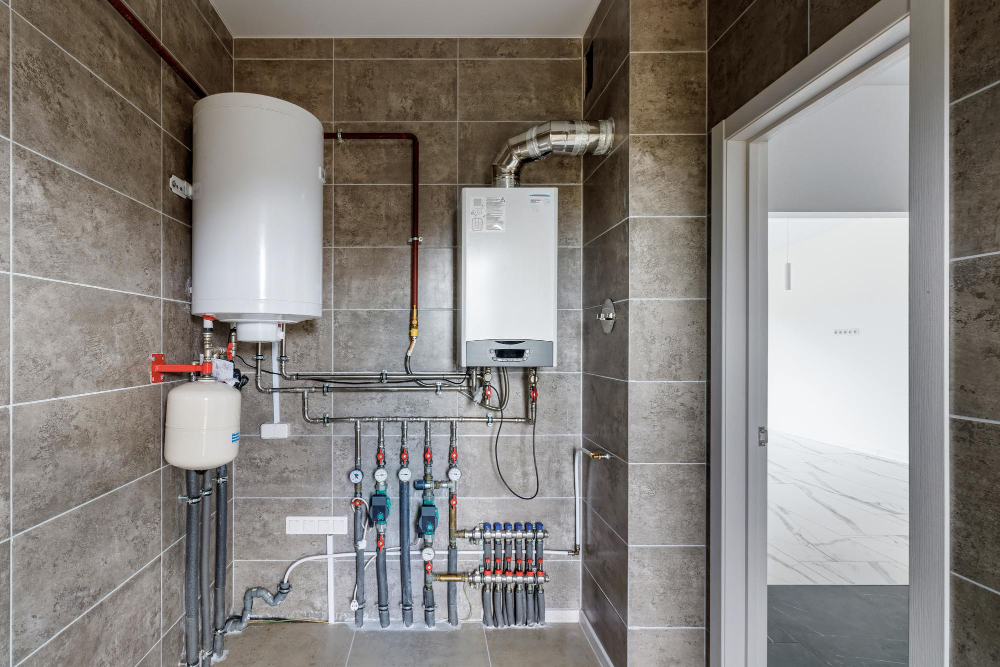
Tank vs tankless water heaters is one of the most common questions Lexington, SC homeowners face when it's finally time to replace an aging unit, and the right answer depends on more than just the price tag on the equipment.
In this article, you will learn how each system actually works, how they compare on cost, efficiency, and lifespan, and how to figure out which one fits your household's hot water needs.
Here's what you need to know.
Keep reading to see which system actually fits your household's hot water habits and budget.
Tank Vs Tankless Water Heaters Lexington SC refers to the choice between a traditional storage-tank water heater, which keeps a reserve of hot water ready at all times, and a tankless system, which heats water only as it's needed without storing any in a tank.
The fundamental difference comes down to whether hot water is stored in advance or heated instantly as it's used.
A tank water heater keeps a set volume of water heated and ready in an insulated storage tank, refilling and reheating as hot water is drawn out.
Homeowners dealing with common issues like those covered under tank water heater repair often find that many tank problems stem from sediment buildup or aging components inside the storage tank itself.
That storage design is simple and reliable, which is part of why tank systems remain the most common type installed in homes today.
Rather than storing hot water, a tankless unit heats water directly as it flows through the system, activating only when a hot water tap is opened.
Understanding how tankless heaters work helps homeowners see why these units can provide a continuous supply of hot water without ever running out, unlike a tank that can be depleted.
That on-demand design is the core difference driving most of the other distinctions between the two systems.
What homeowners can expect from each system's efficiency:
Whether tankless is the better fit depends on household hot water usage, available space, and how much homeowners want to invest upfront.
Because tankless units only heat water when it's actually needed, they avoid the ongoing standby losses that occur with a tank system holding water hot around the clock.
Reviewing the tankless water heater benefits most homeowners notice helps clarify whether the efficiency gain is significant enough to justify the switch for a specific household.
That efficiency advantage compounds over the system's full lifespan, which is part of why tankless units often appeal to homeowners planning to stay in their home long term.
Tankless units are compact and wall-mounted, freeing up the floor space a bulky storage tank would otherwise occupy in a utility closet, garage, or basement.
Learning more about tankless water heater services can help homeowners understand installation requirements specific to wall-mounted units before committing to the switch.
That space savings is especially valuable in smaller homes or homes with limited utility space.
Common questions about tankless hot water supply:
Will a tankless system ever run out of hot water? No, since it heats water continuously as needed rather than drawing from a limited stored supply, though flow rate limits still apply.
Can a tankless system handle multiple showers running at once? It depends on the unit's capacity, and homeowners noticing tankless water heater issues with inconsistent temperature during heavy simultaneous use should have the system's sizing evaluated.
Does a tankless system provide hot water instantly? Nearly, though there is typically a brief delay while water travels from the unit to the fixture, similar to a tank system.
Can undersized tankless units struggle with high demand? Yes, which is why correct sizing for the household's peak hot water demand is essential.
Tank systems remain a practical, reliable choice for many households despite the efficiency advantages tankless systems offer.
Tank water heaters generally have a lower purchase price and simpler installation requirements than tankless units, which often need upgraded gas lines or electrical service.
Homeowners comparing quotes should review an affordable plumbing company guide to understand how to evaluate cost and quality together, rather than choosing based on price alone.
That lower upfront cost is often the deciding factor for homeowners working with a tighter budget.
A storage tank keeps a set volume, commonly 40 to 50 gallons for a typical household, heated and ready to use at any moment.
Reviewing a water heater expansion tank guide can help homeowners understand a related component that helps manage pressure changes in a closed tank-based water heating system.
This straightforward design is part of why tank systems remain simple to install, maintain, and repair compared with more complex tankless equipment.
Weighing tank against tankless for your situation:
Reasons a tank system may be the better fit
Reasons to consider a water heater upgrade guide toward tankless instead
Upfront cost and long-term value tell two different stories when comparing these two systems.
Unit type, fuel source, and whether existing infrastructure needs modification all affect the total installation cost for either system.
Reviewing a tankless installation guide helps homeowners understand what's involved before requesting quotes, since tankless installation often includes additional steps beyond what a tank replacement requires.
Getting an itemized estimate for either option helps homeowners compare quotes fairly.
Tankless units frequently require upgraded gas lines, additional venting, or electrical service capable of handling their higher instantaneous power draw.
Comparing gas vs electric tankless options is worth doing early, since the fuel type significantly affects what infrastructure upgrades, if any, are needed for installation.
That additional upfront work is the primary reason tankless installation typically costs more than a straightforward tank replacement.
Despite the higher upfront cost, tankless systems can offset that difference over time through lower monthly operating costs.
Energy.gov notes that tankless water heaters avoid the standby energy losses associated with storage water heaters, which is the primary source of their ongoing operating cost advantage.
Factoring in this long-term savings, not just the purchase price, gives a more complete picture of each system's actual value.
Lifespan is one of the clearest practical differences between the two systems.
Most tank water heaters last between 10 and 15 years, with lifespan affected significantly by water quality, usage, and maintenance history.
Reviewing tips to prevent water heater corrosion can help homeowners get the most years possible out of a tank system before replacement becomes necessary.
Sediment buildup and tank corrosion are the most common reasons a tank system fails before reaching the upper end of its expected lifespan.
Tankless water heaters typically last around 20 years, roughly double the lifespan of a tank system, thanks to their simpler internal components and lack of a corrosion-prone storage tank.
Following tankless maintenance steps consistently is what allows a tankless unit to reach or exceed that expected lifespan.
That extended lifespan is a meaningful factor when weighing the higher upfront cost of tankless equipment.
A basic water heater maintenance checklist:
Efficiency differences between the two systems come down to how each one handles heat when hot water isn't actively being used.
A tank system continuously reheats water to maintain its set temperature, even during long stretches when no hot water is being used, which wastes energy as standby loss.
Vermont's state energy office explains that tankless water heaters avoid the standby heat losses associated with storage water heaters, since they only activate when hot water is actually demanded.
That constant reheating cycle is the single biggest factor separating tank efficiency from tankless efficiency.
Because a tankless unit only fires up when a hot water tap is opened, it eliminates the reheating cycle that drives most of a tank system's energy waste.
Understanding why a tankless tune-up matters helps homeowners protect this efficiency advantage over time, since a poorly maintained tankless unit can lose some of its efficiency edge.
That combination of on-demand heating and proper maintenance is what allows tankless systems to maintain their efficiency advantage for the long term.
Households with lower daily hot water usage tend to see the biggest efficiency gains from switching to tankless, while heavy-usage households see a smaller, though still meaningful, improvement.
Factors that influence how much a household benefits from tankless efficiency:
A few practical factors, evaluated honestly, help homeowners choose the system that actually fits their household.
Larger households with more simultaneous hot water demands generally need either a larger tank or a properly sized tankless unit, sometimes requiring multiple units for heavy-use homes.
Reviewing tankless repair tips can help homeowners already using a tankless system recognize when sizing, rather than a mechanical fault, is behind ongoing performance complaints.
Matching the system to household size upfront prevents most sizing-related complaints down the line.
Steps to evaluate installation space before choosing a system:
Peak demand, meaning the maximum amount of hot water needed at any one time, matters more than average daily usage when sizing either system correctly.
Consistent tankless system maintenance helps ensure the unit continues meeting that peak demand reliably over its full expected lifespan.
Underestimating peak demand is one of the most common sizing mistakes homeowners make when switching to tankless.
An undersized system, tank or tankless, leads to running out of hot water or inconsistent temperatures, while an oversized system wastes money on unnecessary capacity.
Reviewing tips for hiring plumbing contractors can help homeowners find an installer experienced with accurately sizing both tank and tankless systems for a specific household.
Getting sizing right the first time avoids the cost and disruption of correcting an undersized or oversized installation later.
Sometimes the more pressing question isn't tank versus tankless, but whether an existing unit is worth repairing at all.
Rusty water, inconsistent temperatures, unusual noises, and visible leaks around the base of the unit are all common signs that a water heater is nearing failure.
Reviewing common water heater problems helps homeowners recognize these signs early, before a minor issue turns into a more disruptive failure.
Catching these signs early gives homeowners more time to plan a replacement on their own schedule.
Once a water heater needs multiple repairs within a short period, the cumulative cost often approaches what a full replacement would cost outright.
Homeowners who have needed affordable water heater repair more than once or twice in a short span are usually past the point where continued repairs make financial sense.
Tracking repair frequency over time gives a clearer picture than evaluating each repair bill in isolation.
A tank system approaching or past 10 to 15 years, or a tankless unit approaching 20 years, is a reasonable candidate for replacement evaluation, even without an active failure.
Steps to guide the repair-or-replace decision:
Tank vs tankless water heaters ultimately comes down to weighing upfront cost against long-term efficiency, lifespan, and how your household actually uses hot water. A tank system offers a lower upfront cost and simpler installation, while a tankless system delivers better efficiency and a longer service life in exchange for a higher initial investment. If you're trying to decide which system fits your Lexington, SC home, contact Dr. Rooter Lexington for a professional recommendation based on your household's specific hot water needs.