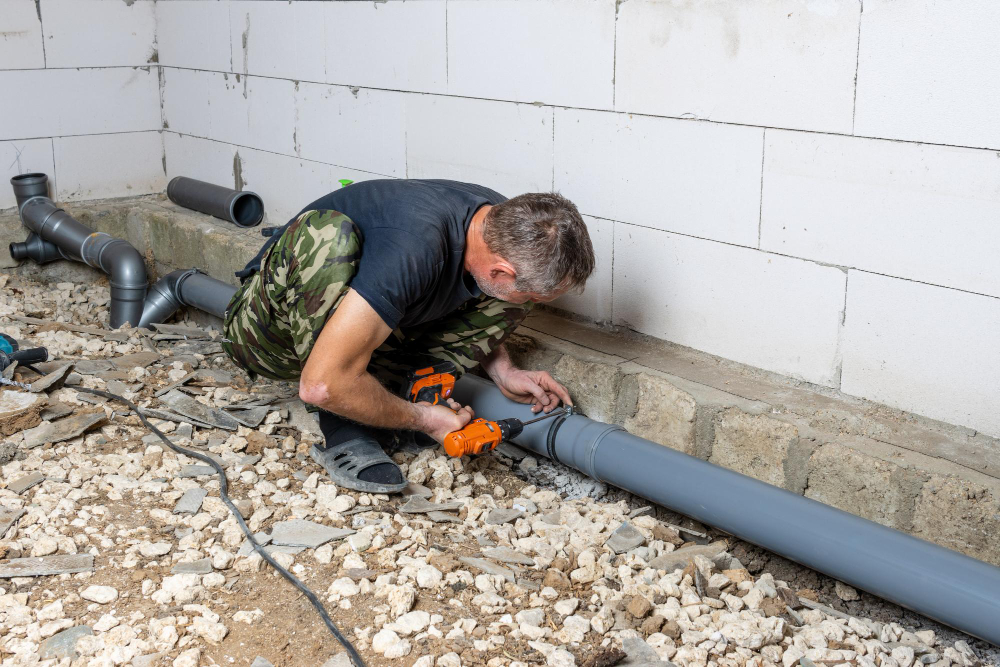
No-dig sewer line repair has changed how Lexington, SC homeowners can address a damaged sewer line, since fixing the problem no longer automatically means excavating a trench across the yard.
In this article, you will learn exactly how pipe lining works, what problems it can and can't fix, and how to tell whether your specific sewer line is a good candidate for this approach.
Here's what you need to know.
Keep reading to see whether pipe lining is the right fit for your specific sewer line problem.
No-Dig Sewer Line Repair Lexington SC refers to trenchless methods, most commonly cured-in-place pipe lining, that rehabilitate a damaged sewer line by inserting a resin-saturated liner through existing access points rather than digging a trench along the pipe's length.
No-dig repair relies on using the damaged pipe itself as a guide, rather than removing it entirely through excavation.
Trenchless methods work through small access points, typically manholes, rather than a continuous trench dug along the pipe's entire length.
According to an Environmental Protection Agency fact sheet, trenchless sewer rehabilitation techniques generally correct pipe deficiencies with less disturbance, economic impact, and environmental degradation than the traditional dig-and-replace method.
That reduced disturbance is the defining characteristic that sets pipe lining apart from conventional repair.
Pipe lining, also known as cured-in-place pipe or CIPP, uses a flexible felt tube saturated with resin, which is inserted into the damaged pipe and then cured into a hard, seamless liner.
The City of Medford, Oregon describes its own use of this method, explaining that crews reline existing pipes with a felt liner saturated with epoxy, then inflate and cure it in place, avoiding the need to dig up roads or yards.
That same basic process is used for residential sewer line repairs on a smaller scale.
Once cured, the resin liner forms a new, smooth pipe wall inside the old one, effectively creating a pipe within a pipe that restores structural integrity and flow.
Learning more about trenchless pipe replacement helps homeowners understand how this new liner takes over the pipe's structural role, effectively resolving cracks, small gaps, and minor misalignments in the original pipe.
What homeowners can expect from a completed liner installation:
Whether pipe lining is the better choice depends on the property's layout and how much disruption a homeowner is willing to accept.
Because pipe lining uses existing access points, it avoids the continuous trench that traditional excavation requires along the pipe's entire length.
Homeowners researching whether trenchless sewer replacement makes sense for their property often cite this reduced disruption as the primary reason for choosing it over traditional excavation.
That difference matters most for properties with limited yard space or extensive existing landscaping.
What pipe lining typically preserves:
Pipe lining installations are often completed in a single day, while traditional excavation can take considerably longer once digging, pipe replacement, backfilling, and restoration are all factored in.
Getting a professional opinion from trenchless sewer contractors experienced in both approaches helps homeowners understand realistic timeline expectations for their specific situation.
That faster completion is part of why pipe lining is often preferred for occupied residential properties.
Pipe lining can address a wide range of common sewer line issues, though certain conditions fall outside what the method can resolve.
Cracks, small breaks, and general interior deterioration are among the most common issues that pipe lining is specifically designed to address.
Reviewing common pipe corrosion warning signs can help homeowners catch this kind of damage early, while pipe lining remains a straightforward and effective repair option.
Catching cracks and corrosion before they worsen significantly improves the odds that lining, rather than a more extensive repair, will be sufficient.
Tree roots are one of the most common causes of sewer line damage, entering through small cracks or joints and gradually expanding those openings over time.
The Environmental Protection Agency notes that tree roots entering through defects or openings in a sewer line are a common cause of blockages nationwide, contributing to the ongoing maintenance needs of the nation's sewer infrastructure.
Pipe lining resolves this problem effectively, since the new liner seals the cracks and joints roots previously used to enter, addressing tree root damage at its actual source rather than just clearing the immediate blockage.
A checklist for whether a pipe is a good candidate for lining:
Severely collapsed sections, significant misalignment, or a pipe that has lost its structural shape entirely cannot be lined, since the process relies on the existing pipe as a mold for the new liner.
Homeowners noticing residential repiping signs throughout their home's plumbing should have a professional confirm whether the sewer line's condition still qualifies for lining or requires a different approach.
A camera inspection is the only reliable way to determine which category a specific pipe falls into.
Lifespan is one of the strongest arguments in favor of pipe lining as a long-term solution.
A properly installed cured-in-place liner is commonly rated for a design life of around 50 years, comparable to or exceeding many traditional pipe replacement materials.
Homeowners weighing this option against repiping installation service often find that lining offers similar long-term durability without the disruption a full replacement requires.
Installation quality and the condition of the host pipe both play a role in whether a liner reaches its full expected lifespan.
Even after a successful lining repair, ongoing care around what's flushed or poured down drains helps protect the new liner from unnecessary strain.
Reviewing how sewer line maintenance prevents costly plumbing problems applies just as much to a newly lined pipe as it does to any other sewer line.
Good household habits protect the investment represented by a completed lining repair.
Common questions about lining longevity:
Does a poorly conditioned host pipe reduce the liner's lifespan? It can, which is why sewer line inspection service evaluations before installation matter so much for long-term results.
Can new tree roots damage an already-lined pipe? It's uncommon, since the liner seals the cracks roots previously used to enter, though nearby root growth is still worth monitoring.
Does lining eliminate the need for future inspections? No, periodic inspections remain a good practice even after a successful lining repair.
Can a lined pipe still develop new problems over time? Rarely, assuming proper installation, though any pipe can develop new issues over a long enough timeframe.
Cost comparisons depend on more than just the base price of each method.
Pipe diameter, length of the damaged section, and the complexity of the installation all influence the total project cost for a lining repair.
Comparing this against broader repiping cost factors helps homeowners understand how sewer line repair pricing compares with other plumbing investments in the home.
Getting a detailed, itemized estimate helps homeowners understand exactly what's driving their specific quote.
While the specialized equipment used for lining can carry a higher base cost than basic excavation tools, the savings on landscaping, driveway, and hardscaping restoration often offset much of that difference.
Weighing pipe lining against traditional excavation costs:
Where pipe lining often costs less overall
Where traditional excavation may cost less upfront
A fair cost comparison always accounts for the full project, including any restoration work, rather than just the price of the repair method itself.
Reviewing an affordable plumbing company guide can help homeowners evaluate quotes for both methods on equal footing, rather than comparing only the headline excavation or lining price.
That full-cost view is what usually determines which method offers better overall value for a specific property.
Eligibility depends on details that are difficult to determine without a direct look inside the pipe.
A camera inspection allows a technician to see the exact condition and location of damage inside the pipe before recommending pipe lining or another repair method.
A sewer camera inspection replaces guesswork with a direct, visual assessment, which is the only reliable way to confirm whether a pipe's condition qualifies for lining.
This step is typically the starting point for any serious evaluation of a sewer line's repair options.
Steps a technician follows to determine lining eligibility:
Severely collapsed, misaligned, or structurally compromised pipe sections generally fall outside what lining can address, since the process depends on the existing pipe holding its shape.
Reviewing main sewer line repair signs early gives homeowners the best chance of catching a problem before it progresses to the point where only traditional replacement remains an option.
Early detection genuinely expands the range of repair options, including lining, available later.
Beyond avoiding excavation, pipe lining offers practical advantages worth understanding on their own.
Because lining avoids a continuous trench, homeowners can often continue using most of their property normally throughout the repair process.
Reviewing sewer repair warning signs early increases the likelihood that lining, with its minimal disruption, remains a viable option by the time repair becomes necessary.
That minimal disruption is often the single biggest reason homeowners choose lining when it's available.
The new liner creates a smooth interior surface, which can actually improve flow capacity compared with an aging, corroded, or root-damaged pipe.
Understanding common sewer line blockages helps homeowners appreciate how a smoother, structurally sound liner reduces the conditions that previously contributed to recurring blockages.
That flow improvement is a practical bonus beyond simply fixing the original damage.
Restoration tasks pipe lining typically eliminates:
Reviewing tips for hiring plumbing contractors experienced in trenchless methods helps homeowners find someone who can execute this reduced-restoration approach correctly.
Recognizing the early signs of sewer line trouble gives homeowners the best chance of qualifying for pipe lining before damage progresses further.
A sewer backup, especially one that recurs after cleaning, often points to underlying pipe damage rather than a simple, one-time blockage.
Understanding the steps involved in sewer backup repair helps homeowners recognize when a backup warrants a deeper investigation into the pipe's condition, rather than just another cleaning.
Addressing this early keeps lining on the table as a viable, less disruptive repair option.
Slow drains throughout the home and persistent sewage odors are both early signs that a sewer line problem may be developing, even without a full backup yet.
Reviewing common drain odor causes can help homeowners distinguish between a simple fixture issue and a sign of a more serious sewer line problem worth having inspected.
Catching these signs early is what keeps repair options, including lining, open before the damage requires a more invasive fix.
Scheduling a camera inspection at the first sign of trouble, rather than waiting for a full backup, gives homeowners the best chance of qualifying for a less invasive repair.
Annual sewer inspection visits, even without an active symptom, help homeowners catch developing issues while lining and other trenchless options remain realistic solutions.
That proactive approach is ultimately what preserves the widest range of repair choices for the future.
No-dig sewer line repair gives Lexington, SC homeowners a genuine alternative to traditional excavation for many common sewer line problems, from cracks and corrosion to tree root intrusion. Whether pipe lining is the right choice for a specific pipe depends on its condition and accessibility, which is why a camera inspection is such an important first step. If you're dealing with a sewer line issue and want to know whether pipe lining is an option for your home, contact Dr. Rooter Lexington for a professional inspection and recommendation.