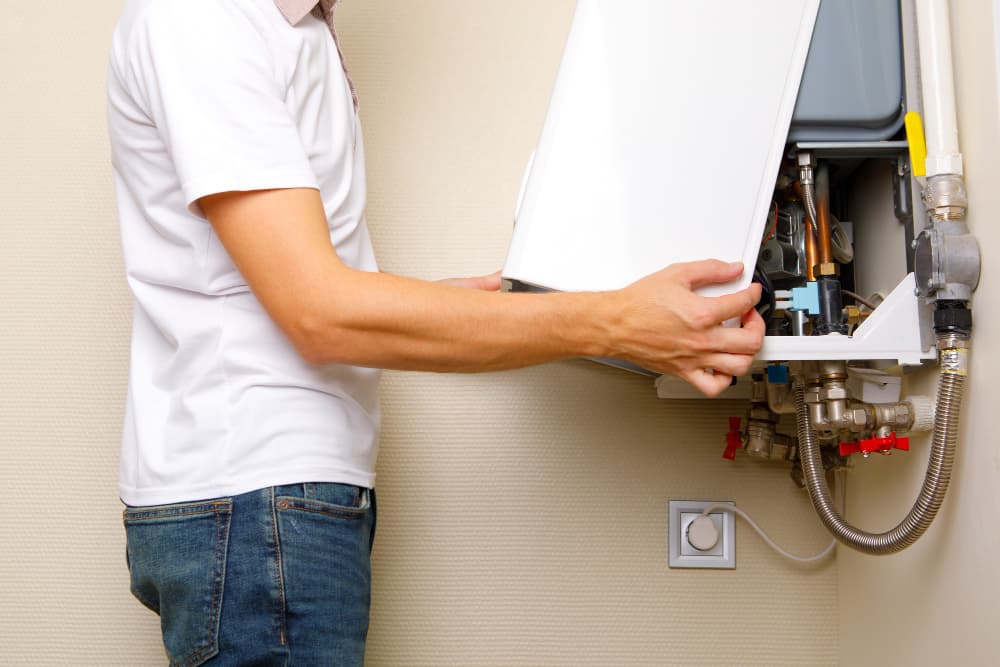
Consistent tankless water heater maintenance is what keeps your unit delivering endless hot water year after year instead of turning into a costly breakdown. With the right care schedule, you protect the heat exchanger, preserve efficiency, and avoid the kind of mineral damage that ends a system's life early.
Tankless water heaters provide hot water on demand, but they need regular care to keep working well. Regular maintenance protects your investment and ensures your family always has reliable hot water. Without proper upkeep, minerals can build up inside the heating chamber and reduce performance over time.
These systems cost more than traditional tank heaters, so taking care of them makes good financial sense. The good news is that tankless units need less maintenance than tank models. A few simple tasks each year can prevent common problems and extend the life of your system.
This guide will help you understand what your tankless water heater needs to stay in good shape. In this article, we'll cover:
- Early signs of unit decline
- Consequences of skipping maintenance
- System flushing and descaling practices
- Diagnosing temperature irregularities
- Benefits of professional servicing
Keep reading to learn how the right maintenance routine protects your hot water supply, your energy bills, and the long-term reliability of your unit.
Early signs of unit decline
Your tankless water heater will show clear warning signs before it stops working completely. Mineral deposits, hard water damage, and reduced water pressure indicate your unit needs attention now.
Mineral buildup impacts heating performance
Mineral deposits from your water supply accumulate inside your tankless water heater over time. These deposits, mostly calcium and magnesium, form a crusty layer on the heat exchanger where water gets heated. The buildup creates a barrier between the heating element and the water flowing through your system.
When minerals coat the heat exchanger, your unit has to work harder to heat water to the right temperature. You'll notice the water takes longer to get hot or doesn't reach the temperature you set. Your energy bills may increase because the system uses more power to overcome the mineral barrier.
According to the U.S. Department of Energy, demand-type water heaters can be 24% to 34% more energy efficient than conventional storage tank models in homes that use about 41 gallons or less of hot water daily, but this advantage depends on the unit operating at design conditions without mineral scaling reducing heat transfer.
Common signs of mineral buildup include:
- Water temperature that changes without warning
- Unusual noises like popping or rumbling during operation
- System shutting off before delivering enough hot water
- Error codes appearing on your display panel
The rate of mineral accumulation depends on your water hardness. Areas with hard water see deposits form much faster than regions with soft water. Without regular descaling, these minerals will reduce your unit's efficiency by up to 30 percent within the first year.
Hard water effects on internal components
Hard water damages more than just your heat exchanger. The high mineral content corrodes pipes, valves, and filters throughout your tankless system. Small particles can clog the inlet filter screen, which reduces water flow into your unit.
Your pressure relief valve may stick or fail when mineral deposits build up around the moving parts. The flow sensor, which tells your unit when to start heating, becomes less accurate with mineral coating. This causes delayed heating or prevents the system from turning on at all.
Internal corrosion from hard water leads to pinhole leaks in the heat exchanger. These leaks start small but grow over time, eventually requiring expensive repairs or full unit replacement.
Weak hot water flow as a warning sign
Reduced water pressure from your hot taps signals a problem inside your tankless unit. When you turn on multiple faucets or start your dishwasher, the flow may drop to a trickle instead of maintaining steady pressure.
This happens when mineral buildup narrows the passages where water flows through your heat exchanger. The restricted pathways can't handle your normal water demand. You might get full pressure for cold water but weak flow when using hot water.
A clogged inlet filter also reduces flow throughout your system. Your unit may struggle to sense water movement, causing it to cycle on and off repeatedly. This creates an inconsistent supply of hot water that makes everyday tasks difficult.
Consequences of skipping maintenance
When you skip regular maintenance on your tankless water heater, mineral deposits accumulate inside the heat exchanger and filters get clogged with debris. These problems force your system to work harder, raise energy bills, and can lead to complete system failure.
Scale buildup strains the system
Mineral deposits from hard water form a crusty layer inside your heat exchanger over time. This scale acts like insulation between the heating element and the water flowing through your unit.
Your heater has to reach higher temperatures to warm the same amount of water. The extra heat puts stress on internal components and makes your unit work longer to deliver hot water to your faucets.
Common effects of scale buildup:
- Water takes longer to heat up
- Temperature fluctuates during showers
- Energy bills increase by 20-30%
- Heat exchanger can crack or fail
The scale layer gets thicker each month you wait. A unit with heavy buildup uses significantly more gas or electricity than a clean one.
Dirty intake filters reduce burner efficiency
Your tankless water heater pulls in air through intake filters to support combustion. Dust, lint, and debris block these filters when you don't clean them regularly.
Restricted airflow means the burner can't get enough oxygen to burn fuel efficiently. Your unit may produce less hot water or struggle to reach the temperature you set. Gas units with blocked filters create incomplete combustion, which wastes fuel and may produce carbon buildup on internal parts.
According to the U.S. Consumer Product Safety Commission, gas-burning appliances that are not properly maintained, ventilated, or operated can produce carbon monoxide, an odorless and colorless gas that causes serious illness and fatalities each year, which is why combustion components on gas tankless units need consistent attention.
Most manufacturers recommend checking intake filters every three to six months. Cleaning them takes just a few minutes but prevents hours of frustration with poor hot water performance.
Small issues leading to unexpected shutdowns
Minor problems grow into major failures when you ignore routine maintenance. A small error code that appears once becomes a recurring shutdown that leaves you without hot water.
Sensors get covered in mineral dust and send incorrect readings to the control board. Loose connections from normal vibration cause intermittent power issues. Worn seals start as tiny drips but turn into leaks that trigger safety shutoffs.
Your unit's self-protection features will shut down the system to prevent damage when it detects these problems. You end up with cold showers and emergency repair bills that cost far more than regular maintenance would have.
System flushing and descaling practices
Mineral deposits from hard water build up inside your tankless water heater over time and reduce its efficiency. Regular flushing removes these deposits and keeps your unit running properly.
Vinegar flushing to remove deposits
White vinegar works as an effective descaling solution for flushing a tankless water heater. You need about 2-3 gallons of undiluted white vinegar for each flush.
The process requires a flush kit with two hoses, a submersible pump, and a 5-gallon bucket. You connect one hose from the bucket to your water heater's cold water service valve and another hose from the hot water service valve back to the bucket.
Basic flushing steps:
- Turn off the power and gas supply
- Close the water isolation valves
- Attach the hoses to service valves
- Fill the bucket with vinegar
- Run the pump for 45-60 minutes
- Flush with clean water for 5-10 minutes
The vinegar dissolves calcium and lime deposits as it circulates through the heat exchanger. Some manufacturers recommend commercial descaling solutions instead of vinegar, so check your owner's manual first.
Increased descaling frequency in hard water homes
Hard water contains high levels of calcium and magnesium that accelerate mineral buildup. According to the U.S. Geological Survey, water with more than 121 milligrams per liter of calcium carbonate is classified as hard or very hard, and these levels are common across many U.S. regions, which means most homeowners face accelerated scaling on heating equipment without realizing it.
You should descale your tankless water heater every 6 months in hard water areas instead of the standard annual schedule. Some homes with extremely hard water may need quarterly flushing.
Installing a water softener reduces the mineral content before water enters your heater. This cuts down on scale formation and lets you return to yearly maintenance. You can test your water hardness with a simple test kit from hardware stores.
Risks of ignoring scale accumulation
Scale buildup creates several problems that damage your tankless water heater and void most warranties. The mineral layer acts as insulation between the heating element and water, forcing your unit to work harder and use more energy.
Heavy scale deposits restrict water flow through the heat exchanger. This causes inconsistent water temperatures and reduced flow rates at your fixtures. Your heater may display error codes or shut down completely.
Problems from scale buildup:
- 20-30% loss in energy efficiency
- Overheating and component failure
- Corroded heat exchanger pipes
- Shortened unit lifespan by 5-10 years
- Warranty claims denied due to neglect
The heat exchanger can crack or develop leaks when scale prevents proper heat transfer. Replacing this component costs $500-$1,200 in parts and labor.
Diagnosing temperature irregularities
Temperature problems with your tankless water heater usually point to specific maintenance issues that need attention. Recognizing these patterns helps you fix problems before they get worse.
Fluctuating water temperatures indicating flow issues
When your water switches between hot and cold during a shower, the problem often comes from inconsistent water flow through the heater. Your tankless unit needs a minimum flow rate to turn on and heat water properly.
Low water pressure in your home can cause the heater to turn on and off repeatedly. This creates sudden temperature changes that make showers uncomfortable.
Common flow-related causes include:
- Partially closed water valves reducing flow to the unit
- Clogged inlet filter screens blocking water entry
- Multiple fixtures running at the same time
- Undersized unit for your household needs
Check your inlet filter first since it catches sediment and debris. A dirty filter restricts water flow and triggers temperature swings. Remove the filter and rinse it under running water to clear buildup.
Error codes from delayed maintenance
Your tankless heater displays error codes when sensors detect problems that maintenance would normally prevent. These codes tell you exactly what needs attention.
Scale buildup on heating elements triggers flame failure codes because the unit cannot heat water efficiently. Ignoring these codes leads to complete system shutdown.
Critical maintenance-related error codes:
- Flame failure codes, usually caused by mineral deposits on burners
- Overheat warnings, result from restricted water flow through scaled heat exchangers
- Flow sensor errors, occur when sediment blocks the sensor
Write down any error codes you see and check your owner's manual. Most codes point directly to maintenance tasks you skipped.
Long wait times caused by internal buildup
Waiting longer than usual for hot water means mineral scale has formed inside your heat exchanger. This buildup acts like insulation and slows down the heating process.
Hard water areas see this problem faster because minerals accumulate quickly on heating surfaces. The thicker the scale layer gets, the longer your heater takes to warm water to the set temperature.
Your unit works harder and uses more energy to push through the scale barrier. This increases your utility bills while decreasing hot water output. Annual descaling removes these deposits and restores normal heating speed.
Benefits of professional servicing
Professional tankless water heater service protects your investment and keeps hot water flowing reliably. Trained technicians catch problems early, maintain peak efficiency, and help you stay compliant with warranty requirements.
Annual inspections for early problem detection
A professional technician can spot issues during annual inspections that most homeowners miss. They check for mineral buildup, test pressure levels, and examine connections for leaks or corrosion. These early warnings prevent small problems from turning into expensive repairs or complete system failures.
Technicians use specialized tools to measure gas pressure, test electrical connections, and verify proper venting. They can detect changes in performance before you notice any difference in your hot water supply. This proactive approach saves money and prevents the inconvenience of sudden breakdowns.
Most tankless water heater issues develop gradually over months. A trained eye can identify warning signs like reduced flow rates, unusual noises, or error codes that appear intermittently. Catching these problems early extends your system's lifespan significantly.
Routine service maintains efficiency
Regular professional maintenance keeps your tankless water heater running at maximum efficiency. Technicians perform descaling to remove mineral deposits that force your unit to work harder and use more energy. Clean heat exchangers transfer heat more effectively, which lowers your utility bills.
A complete tankless water heater maintenance checklist includes cleaning inlet filters, flushing the system, and checking all components for wear. These tasks require specific knowledge of your model and proper cleaning solutions. Professionals complete this work quickly without risking damage to sensitive parts.
Well-maintained units heat water faster and use less gas or electricity. You'll notice consistent water temperature and pressure throughout your home. The system won't struggle to meet demand during peak usage times.
Maintenance and manufacturer warranty compliance
Most manufacturers require professional maintenance to keep warranties valid. Missing annual service appointments can void your coverage completely. This means you pay full price for any repairs or replacements that would otherwise be covered.
Professional service creates documented proof of maintenance for warranty claims. Technicians provide detailed records showing what work was performed and when. You need this documentation if a covered component fails and you want the manufacturer to honor their warranty.
Your warranty likely specifies maintenance intervals and qualified service providers. Following these requirements protects your investment for the full warranty period, which can be 10-15 years for many tankless water heater models.
Conclusion
Regular maintenance protects your investment and ensures you always have hot water when you need it. Simple tasks like descaling, filter cleaning, and visual inspections can prevent costly repairs down the road.
You can handle basic tasks yourself, like checking for leaks and cleaning accessible filters. Annual professional service takes care of the more technical work, including thorough descaling and safety checks.
Hard water areas require more frequent attention. Mineral buildup happens faster in these regions, so you might need to flush your system twice a year instead of once.
Your tankless water heater works hard to provide endless hot water on demand. Giving it proper care means it will keep delivering reliable performance year after year. The time and money you spend on maintenance is minimal compared to premature replacement costs.
Schedule your next service appointment now if it has been more than a year. To set up professional tankless water heater maintenance in Lexington, SC, contact Dr Rooter and keep your hot water reliable through every season.