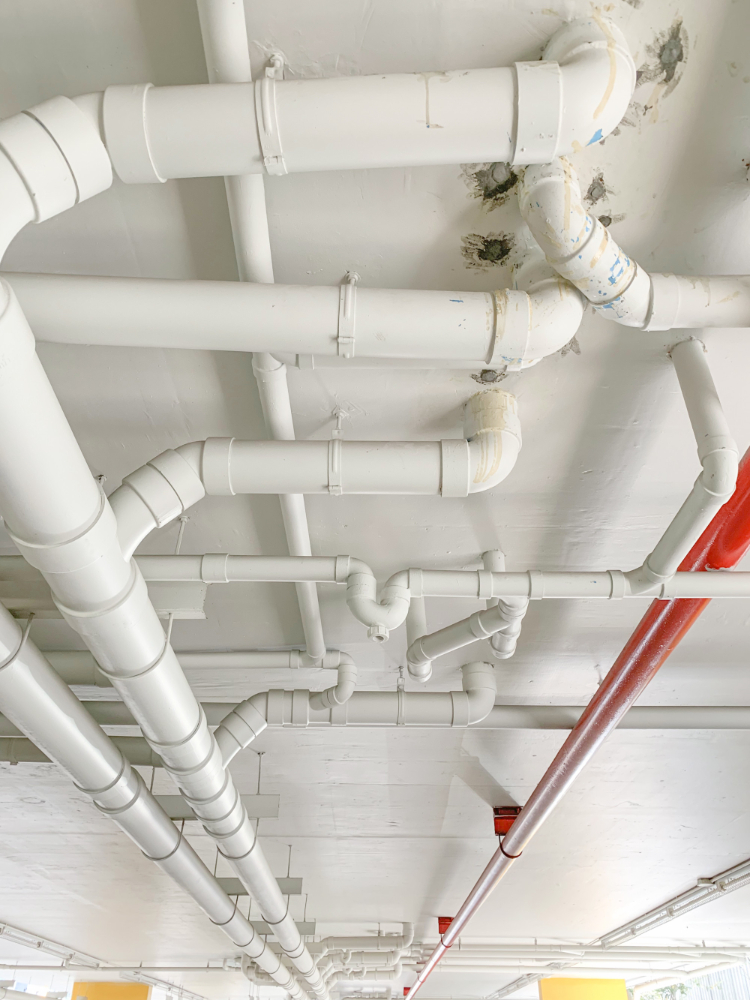
When a sewer line fails under a Rosewood bungalow, the traditional fix means digging a trench across the yard, tearing out sections of driveway or walkway, and potentially destroying the mature landscaping that gives this Columbia neighborhood its character.
For homeowners who chose Rosewood specifically for its tree-lined streets, Craftsman homes, and established gardens, that kind of disruption can feel as damaging as the sewer problem itself. Trenchless sewer repair offers a different path. It fixes or replaces the pipe underground without the full-length trench, preserving the property above while solving the problem below.
Rosewood sits just southeast of downtown Columbia, SC, and its housing stock reflects its early to mid-1900s roots. Most homes in the neighborhood were built between the 1920s and the 1960s, which means the original sewer lines are made of clay tile, cast iron, or Orangeburg pipe, all materials that deteriorate over decades and are now well past their expected service life.
Those aging pipes are buried under yards, driveways, sidewalks, and established landscaping that took generations to grow. Understanding the trenchless sewer repair benefits in Rosewood starts with understanding why the old repair method costs more than just the plumbing work.
The ASCE's 2025 Infrastructure Report Card gave America's wastewater infrastructure a grade of D+, unchanged from 2021. The report found that collection system failures for combined water utilities increased from 2 to 3.3 per 100 miles of pipe over the last decade, a direct consequence of aging infrastructure that is not being replaced fast enough.
Rosewood's sewer lines, many of which are 60 to 100 years old, sit squarely in the category of infrastructure this report is describing.
In this article, you will learn about:
Keep reading to find out why more Rosewood homeowners are choosing to fix their sewer lines from the inside out, and what that means for your property, your budget, and your timeline.
Trenchless sewer repair is exactly what it sounds like: repairing or replacing a damaged sewer line without digging a full-length trench from the house to the street. Instead of excavating the entire pipe path, the plumber accesses the line through one or two small entry points and performs the work from inside the existing pipe or along its path underground.
Two primary methods dominate residential trenchless work, and each one solves a different range of problems. Knowing which one applies to your situation helps you evaluate quotes, ask the right questions, and understand what your plumber is recommending.
Cured-in-place pipe lining, often called CIPP, repairs a damaged sewer line by creating a new pipe inside the old one. The plumber inserts a flexible liner saturated with epoxy resin into the existing pipe, inflates it against the interior walls, and lets the resin cure. Once hardened, the liner forms a smooth, seamless tube inside the original pipe that is structurally independent and resistant to the cracks, joint gaps, and root entry points that caused the original failure.
The process follows a specific sequence:
CIPP lining works best when the existing pipe maintains its basic shape and alignment. It seals cracks, bridges joint gaps, and blocks root entry without removing or replacing the original pipe. The finished liner has a smooth interior that resists buildup and typically carries a rated lifespan of 50 years or more.
For Rosewood homes where the sewer line runs under a mature oak or established garden, lining eliminates the need to disturb anything between the house and the street. According to the South Carolina State Climatology Office, Columbia receives an average of roughly 47 inches of precipitation annually, and that moisture moving through the soil around aging sewer pipes is one of the driving forces behind joint deterioration and root infiltration in the first place.
When the existing sewer pipe is too damaged, collapsed, or misaligned for lining, pipe bursting replaces the entire line without a full-length trench. A hydraulic bursting head is pulled through the old pipe, breaking it apart as it moves, while simultaneously pulling a new pipe, typically high-density polyethylene (HDPE), into the same path behind it.
Pipe bursting requires two access points: one at the house end and one at the street or municipal connection end. The plumber digs a small pit at each end, feeds the bursting cable through the old pipe, and attaches the new pipe to the cable behind the bursting head. The process replaces the old pipe entirely with a new one rated for decades of service.
The situations where pipe bursting makes sense over lining include:
Pipe bursting is more invasive than lining because it requires two excavation pits rather than just access to a cleanout, but it is still dramatically less disruptive than a full open-trench replacement.
Not every sewer line is a candidate for trenchless repair, and the only reliable way to find out is a camera inspection of the existing pipe. The camera reveals the interior condition of the line in real time, showing the plumber exactly what type of damage is present, where it is located, and whether the pipe retains enough structural integrity for lining or needs full replacement through bursting.
During the camera inspection, the plumber evaluates:
This inspection is the foundation of any trenchless recommendation. A plumber who offers trenchless repair without first running a camera is guessing, and the consequences of guessing wrong range from a liner that fails early to a bursting head that gets stuck inside a pipe it was never going to fit through.
For Rosewood homes that have never had a sewer line inspection, the camera assessment doubles as a baseline diagnostic that shows the overall health of the line whether or not trenchless work is needed right away.
The benefits of trenchless repair are real for any homeowner, but they carry extra weight in neighborhoods like Rosewood where the properties themselves are the reason people live there. A vintage bungalow with a brick walkway, a shade garden under a 70-year-old oak, and a driveway that doubles as off-street parking in a walkable neighborhood loses significant value, charm, and function when a backhoe tears through the middle of it.
Trenchless repair sidesteps that destruction, and the savings go beyond aesthetics. They affect your property value, your renovation budget, and the time it takes to get your home back to normal.
Rosewood yards are not large. Many lots in the neighborhood measure 50 by 150 feet or less, and the sewer line runs straight through the middle of that space. A traditional open-trench repair on a Rosewood property typically requires removing a section of driveway or sidewalk, cutting through tree roots in the trench path, pulling up shrubs and garden beds, and piling excavated soil in the only available space, which is usually the rest of the yard.
After the pipe work is done, the homeowner is left with restoration costs that can rival the plumbing bill itself:
Trenchless repair avoids most or all of these costs because the work happens underground. Lining accesses the pipe through an existing cleanout or a single small opening. Bursting uses two small pits rather than a continuous trench. The surface between those points remains untouched.
For Rosewood homeowners who have invested in their outdoor spaces, that difference is not a minor convenience. It is a financial and practical advantage that often makes trenchless the more economical choice even when the pipe work itself costs the same.
The homes in Rosewood were built with foundations and floor systems designed for the soil and grading conditions of the original lot. Digging a trench close to the foundation disrupts those conditions. The excavation changes the soil support under the foundation edge, introduces water and loose fill into areas that were previously stable, and can shift the grade in ways that affect drainage patterns around the house.
For homes built on shallow pier-and-beam foundations, which are common in Rosewood's 1930s and 1940s housing stock, trench excavation near the house end of the sewer line can undermine pier footings and cause differential settlement. That settlement shows up as cracked interior walls, sticking doors and windows, and uneven floors that may require their own repairs.
Trenchless methods minimize this risk because they do not disturb the soil volume adjacent to the foundation. The pipe work happens inside the existing pipe path, and the surface remains compacted and graded as it was before the repair.
Many Rosewood homeowners are actively renovating their mid-century homes, updating kitchens, bathrooms, and plumbing fixtures while preserving the exterior character. A sewer line failure during a renovation can blow the project budget if the traditional repair adds excavation and restoration costs that were never part of the plan.
Trenchless repair keeps the sewer fix contained to the sewer. It does not create a second project (yard restoration) that competes for the same dollars. For homes undergoing whole-home repiping or major bathroom renovations, combining the interior plumbing work with a trenchless sewer repair handles the entire system upgrade in one coordinated effort.
Homeowners evaluating sewer repair options deserve a clear comparison. The choice between trenchless and traditional excavation involves trade-offs in cost, timeline, disruption, and long-term durability. Neither method is universally superior, but for the majority of residential sewer problems in established neighborhoods like Rosewood, trenchless wins on most metrics.
The comparison becomes especially clear when you account for the total project cost rather than just the pipe work alone.
The pipe work itself often costs roughly the same for trenchless and traditional methods, depending on the length of the run and the complexity of the repair. Where the numbers diverge sharply is in the restoration phase.
A traditional open-trench sewer replacement on a Rosewood lot might include:
Trenchless pipe lining or bursting eliminates most of the last four line items. The total cost savings from avoided restoration often runs into the thousands, even when the trenchless pipe work carries a modest premium over the excavation-only price.
For a full picture of what your specific repair would cost under each approach, a plumber who offers both methods can quote them side by side after the camera inspection provides the details.
Traditional excavation on a residential sewer line typically takes three to five days for the full cycle of digging, pipe work, backfill, and initial surface restoration. That timeline stretches further if weather delays the dig, if the trench encounters unexpected utilities, or if concrete work needs to cure before the driveway can be used again.
Trenchless pipe lining can often be completed in a single day for a standard residential run. Pipe bursting usually takes one to two days. In both cases, the homeowner regains full use of the property faster and avoids the extended period of a torn-up yard that traditional excavation requires.
For Rosewood homeowners who rely on limited off-street parking, share a driveway with a neighbor, or need to maintain access for children, pets, or elderly family members, the shorter timeline is a practical advantage that goes beyond simple convenience. It also means less time with your plumbing system out of commission.
Both trenchless methods produce a repaired or replaced line that meets or exceeds the performance of the original pipe. The ASCE estimates the nation's sewer infrastructure is worth more than $1 trillion, and much of it is approaching or past its expected service life. A repair that extends the function of that infrastructure for another 50 to 100 years is an investment, not just an expense.
CIPP lining creates a jointless, seamless interior surface that resists root intrusion, corrosion, and buildup. Most manufacturers rate their liners for 50 years or more. The smooth interior also improves flow compared to the rough, scale-covered interior of an old clay or cast iron pipe, which means fewer drain clogs going forward.
Pipe bursting replaces the old pipe entirely with HDPE, a material that does not corrode, does not develop joint gaps (because the pipe is fused, not jointed), and flexes with soil movement rather than cracking under stress. HDPE sewer lines routinely last 100 years or more, which is why trenchless replacement has become the preferred method for homeowners who want a permanent solution.
Traditional excavation with new PVC pipe also delivers a durable result, so the longevity comparison between methods is roughly even. The advantage trenchless holds is in how that durability is delivered, with far less disruption to the property above.
Trenchless repair handles the vast majority of residential sewer line problems, but it is not a universal solution. Knowing the limitations helps you avoid unrealistic expectations and ensures the repair method matches the actual condition of the pipe.
A good plumber will tell you when trenchless is not the right fit rather than force a method that is going to underperform. The camera inspection exists specifically to make this determination before any work begins.
The range of sewer line issues that trenchless methods can resolve is broad enough to cover most residential situations:
For Rosewood homes with sewer lines showing any of these conditions, trenchless is almost always the recommended first-line approach.
Trenchless methods have limits. The following conditions typically require traditional excavation for at least a portion of the repair:
In some cases, a hybrid approach works best. The plumber excavates and replaces the collapsed or inaccessible section using traditional methods and lines the rest of the run with CIPP, combining both techniques to minimize total disruption while addressing every problem in the line.
You cannot determine trenchless candidacy from the surface. The pipe is buried, and the only way to evaluate its interior condition is with a camera. Symptoms like slow drains, recurring clogs, sewer odors, and wet spots in the yard tell you there is a problem, but they do not tell you whether that problem is a cracked joint (trenchless candidate) or a collapsed section (excavation needed).
The first step for any Rosewood homeowner suspecting a sewer line issue is a professional camera inspection. The camera answers every question that matters:
Armed with that information, you and your plumber can make the right repair decision for your specific line, your property, and your budget.
If your Rosewood home has a sewer line that was installed before the 1980s, or if you have been dealing with recurring drain problems, sewer backups, or unexplained moisture in the yard, a trenchless evaluation begins with a single appointment.
The plumber runs a camera through the sewer line, documents the findings, and discusses the options with you on the spot. If the line is a trenchless candidate, you get a quote for the work and a timeline for completion. If it is not, you get an honest explanation of why and a quote for the alternative. An annual sewer inspection is one of the simplest ways to stay ahead of pipe deterioration and keep your repair options open.
Scheduling this evaluation proactively, before a full backup forces an emergency call, gives you the advantage of choosing your repair method, your plumber, and your timing rather than having all three dictated by a crisis. This applies to residential properties and commercial buildings along Rosewood Drive alike.
The EPA's 2024 Clean Watersheds Needs Survey found that wastewater infrastructure needs across the country have increased 73 percent since the last survey in 2012, driven largely by aging pipe systems that are reaching the end of their useful life. Rosewood's sewer lines are part of that aging inventory. The question is not whether they will need repair. It is whether you will catch the problem in time to choose the least disruptive, most cost-effective method of fixing it.
Trenchless sewer repair exists because digging up a yard is not the only way to fix a pipe. For Rosewood homeowners living in one of Columbia's most character-rich neighborhoods, that distinction matters. The vintage bungalows, established trees, brick walkways, and compact lots that define this community are worth preserving, and trenchless methods let you solve the underground problem without creating an above-ground disaster in the process.
Whether your sewer line needs lining to seal cracks and block roots or full replacement through pipe bursting, the work can happen with minimal surface disruption, a shorter timeline, and a finished result that lasts as long or longer than a traditionally excavated repair. The first step is a camera inspection to see what you are working with.
Contact Dr. Rooter Lexington to schedule a sewer camera inspection and find out whether trenchless repair is the right fit for your Rosewood home. The sooner you know what is happening underground, the more options you have to fix it the smart way.