In the first ten minutes of a plumbing emergency, the order you do things matters more than how fast you do them. Shut off the water, make the area electrically safe, contain what has already spread, then call a 24-hour plumber with a clear description. None of it needs plumbing experience, and it is the same sequence whether the cause is a burst pipe, an overflowing toilet or a water heater giving out.
Here's that sequence, minute by minute, for Lexington, SC homeowners, plus what happens once help arrives.
Minutes one and two: stop the water
Close the main shutoff
Every home has a main water shutoff, usually where the line enters the house, in a crawl space, utility closet or garage, or at the meter box near the street. Once it's closed, the leak stops growing no matter where it started.
- Find the main valve and check which way it closes. Some turn clockwise, others use a quarter-turn lever.
- Close it fully, not partway.
- Open the nearest faucet to confirm the flow has stopped and to drain off pressure.
Find your shutoff on a calm afternoon, before you need it. Searching for it during a leak wastes the minutes that matter most.
Use the fixture valve if the leak is local
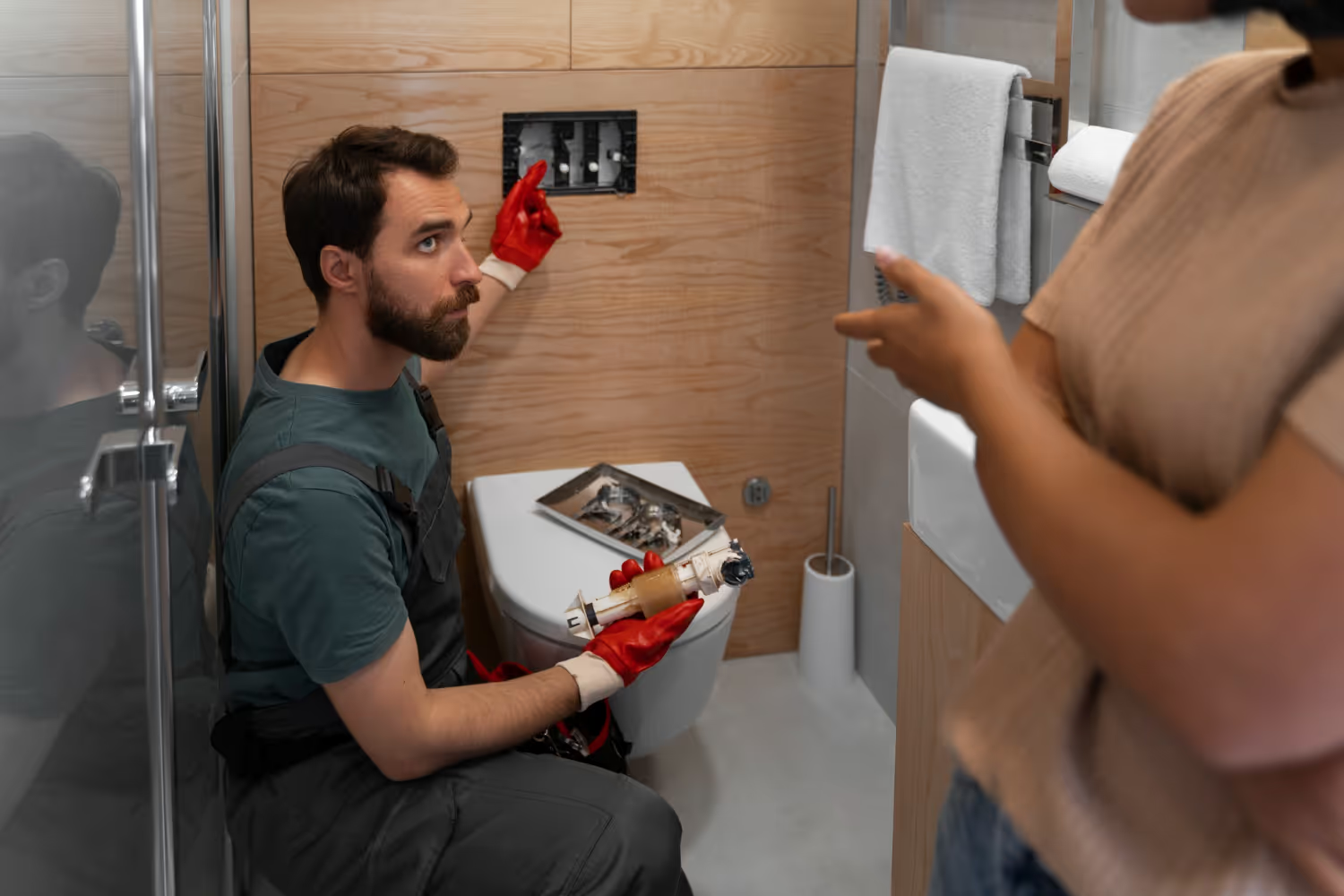
If water is coming from one toilet, sink or appliance, its own shutoff valve may be enough. If that valve won't turn or the leak continues, go to the main.
Minutes two and three: make it safe
Cut power near water
If water has reached an outlet, a power strip, an appliance or the panel area, turn off that circuit at the breaker before anyone walks into the water. Laundry rooms are the usual problem spot, with supply lines and outlets close together.
- Never touch an outlet, switch or cord while standing in water.
- Switch off only the affected circuit if the panel is labeled.
- Leave power off until the area is dry.
Shut down the water heater if it's involved
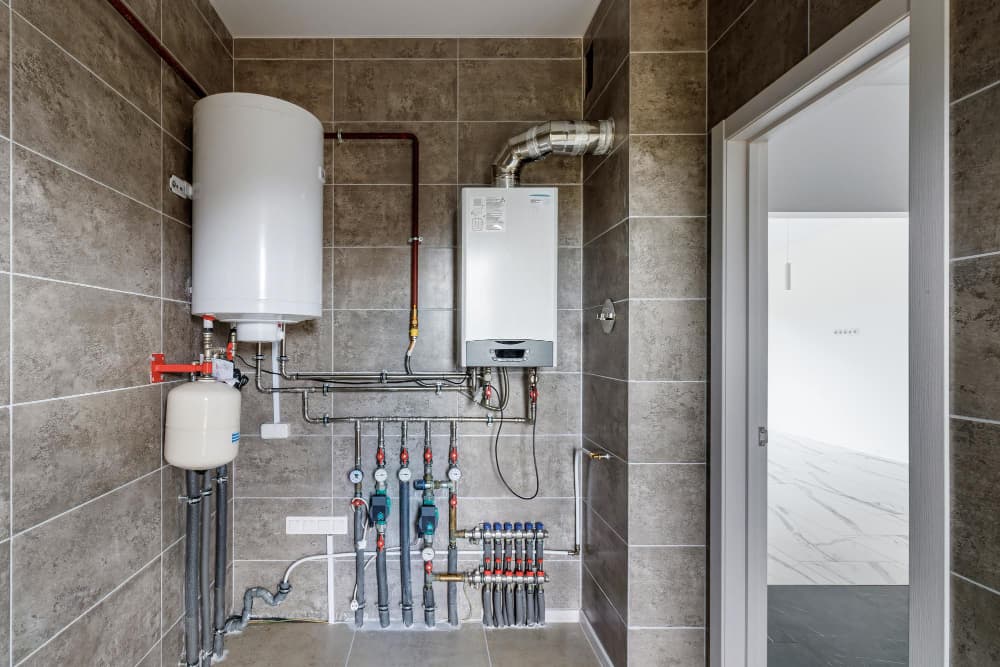
If the leak is coming from the tank, close the cold supply valve on top and turn off the breaker or set the gas control to off. A tank leaking from the seam has usually corroded through and will need replacing, so there's no harm in shutting it down. See water heater repair.
If you smell gas, leave
Get everyone outside, then call your gas utility's emergency line. This comes before anything else on this list.
Minutes three to six: contain it, don't fix it
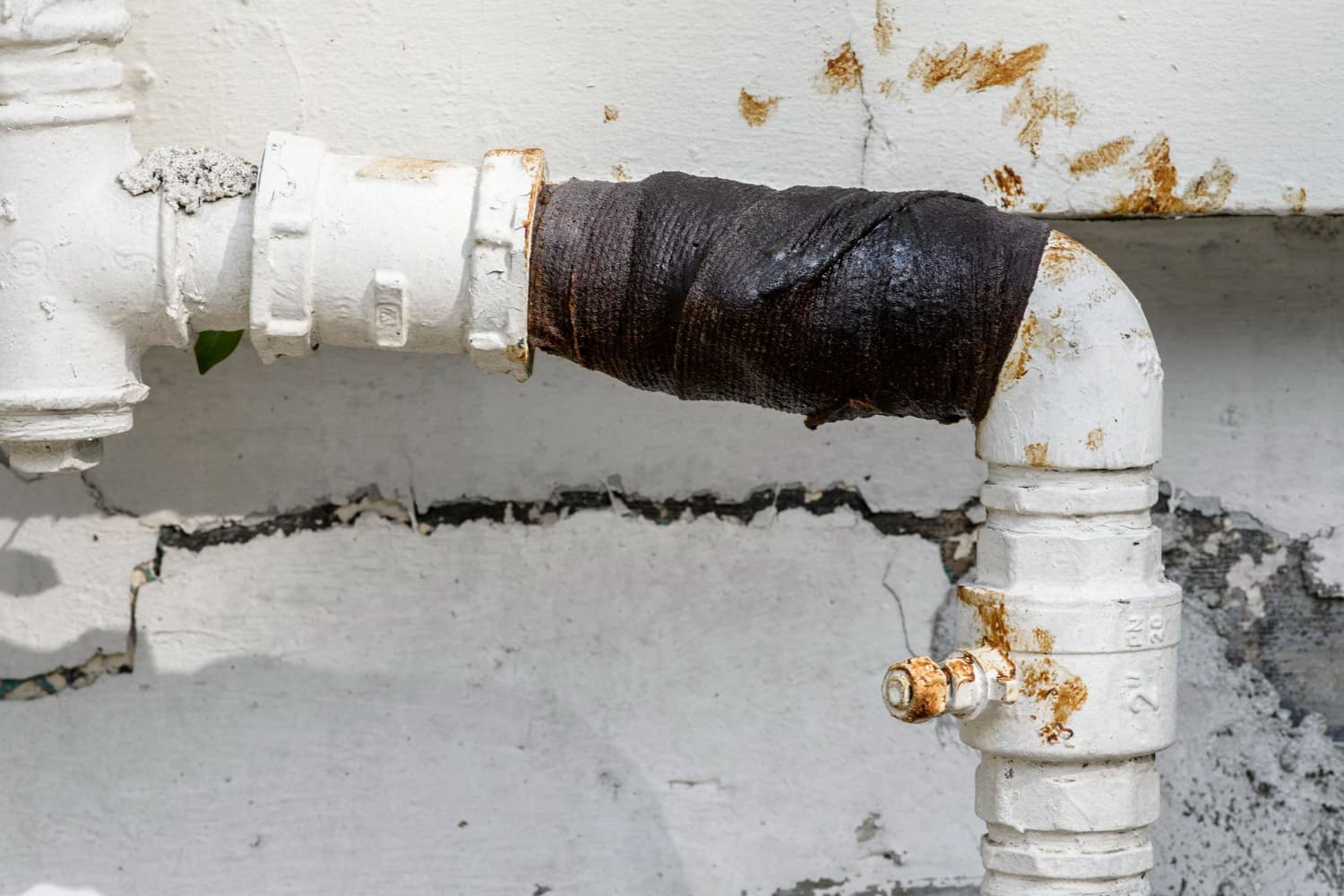
Once the source is off and the area is safe, the job is to stop water spreading. This is not the time for a hardware-store clamp on a pipe that's still partly under pressure. Rushed fixes tend to fail again within hours or move the leak somewhere you can't see.
Move things and soak up water
- Move rugs, furniture, electronics and boxes away from the wet area first. Porous materials soak up water fastest.
- Soak up standing water with towels, a mop or a wet-dry vacuum.
- Pull baseboards away from the wall if water has reached them, so air can get behind.
Buckets and towels for what you can't stop
A drip you can't fully isolate can be managed with a bucket and towels until help arrives. It isn't a fix. It's the difference between a wet spot and a stained ceiling below.
Sewage is different
If the water is coming up from a drain, stop all water use in the house, keep children and pets away, and don't clean it up without gloves and eye protection.
Minutes seven to ten: make the call
What to tell the plumber
A short, specific description gets the right technician and parts to you on the first trip:
- Where the water is coming from, as precisely as you can
- Whether it's clean supply water or a drain or sewage backup
- Whether the main valve is closed and the leak has stopped
- Whether anything electrical was affected
Is it really a 24-hour call?
A burst pipe, sewage in the house or a tank leaking from the bottom all justify an emergency call. A slow drain or a toilet that runs on and off can wait for business hours. Our guide to what qualifies as a plumbing emergency in Lexington helps you decide, and the steps above apply either way.
Call your insurer too
If water has reached flooring, drywall or belongings, take photos before cleanup and let your homeowner's insurer know promptly. That call can happen while you wait.
After the first ten minutes
Start drying right away
The EPA advises drying water-damaged materials within 24 to 48 hours to help prevent mold. That clock starts when the leak starts, so fans, a dehumidifier and open windows help. If a leak ran unnoticed for a while, moisture can stay trapped behind walls or under floors, and leak detection can find it before it becomes a second problem.
What happens when we arrive
Our technician confirms the water is off, finds the actual point of failure, and explains the repair and the price before starting. For drain or sewer problems that may include a camera inspection. Most emergencies are fixed on the first visit. A water heater replacement or a slab leak may need a short follow-up.
Get ready for next time
- Label the main shutoff and show everyone in the house where it is.
- Keep a flashlight, towels and a bucket near it.
- Save our number: (803) 761-9935.
- Consider our Plumb Perfect Club. Members get an annual inspection and no after-hours or weekend dispatch fees.
We serve Lexington and the Midlands around the clock, from Lexington to Killian. Our Killian post on what to do before the plumber arrives covers the same ground for Richland County homes. See 24-hour emergency plumbing for how our service works.
First ten minutes FAQs
Where is the main water shutoff in most Lexington homes?
Usually where the supply line enters the house: a crawl space, garage, utility closet or an exterior wall. There is also a valve at the meter box, which may need a meter key.
Should I try to fix a burst pipe myself?
Shut the water off and leave the pipe alone. A temporary patch on a line under pressure often fails or hides damage.
How quickly does mold start after a leak?
The EPA advises drying materials within 24 to 48 hours to help prevent mold growth, so start drying straight away.
Is Dr Rooter really open 24 hours?
Yes, 24 hours a day, 7 days a week, for plumbing emergencies.
Dealing with a plumbing emergency in the Lexington area? Call Dr Rooter Lexington at (803) 761-9935.