Repair a toilet when the problem is inside the tank: a flapper, fill valve, chain or handle. Replace it when the problem is the porcelain itself, when it leaks at the base again after a reseal, or when it's old enough that you're replacing parts every year. For most Lexington, SC homeowners, that one question, tank or toilet, settles it. Here's how to check, and what each path involves.
Start with the tank: is it just a part?
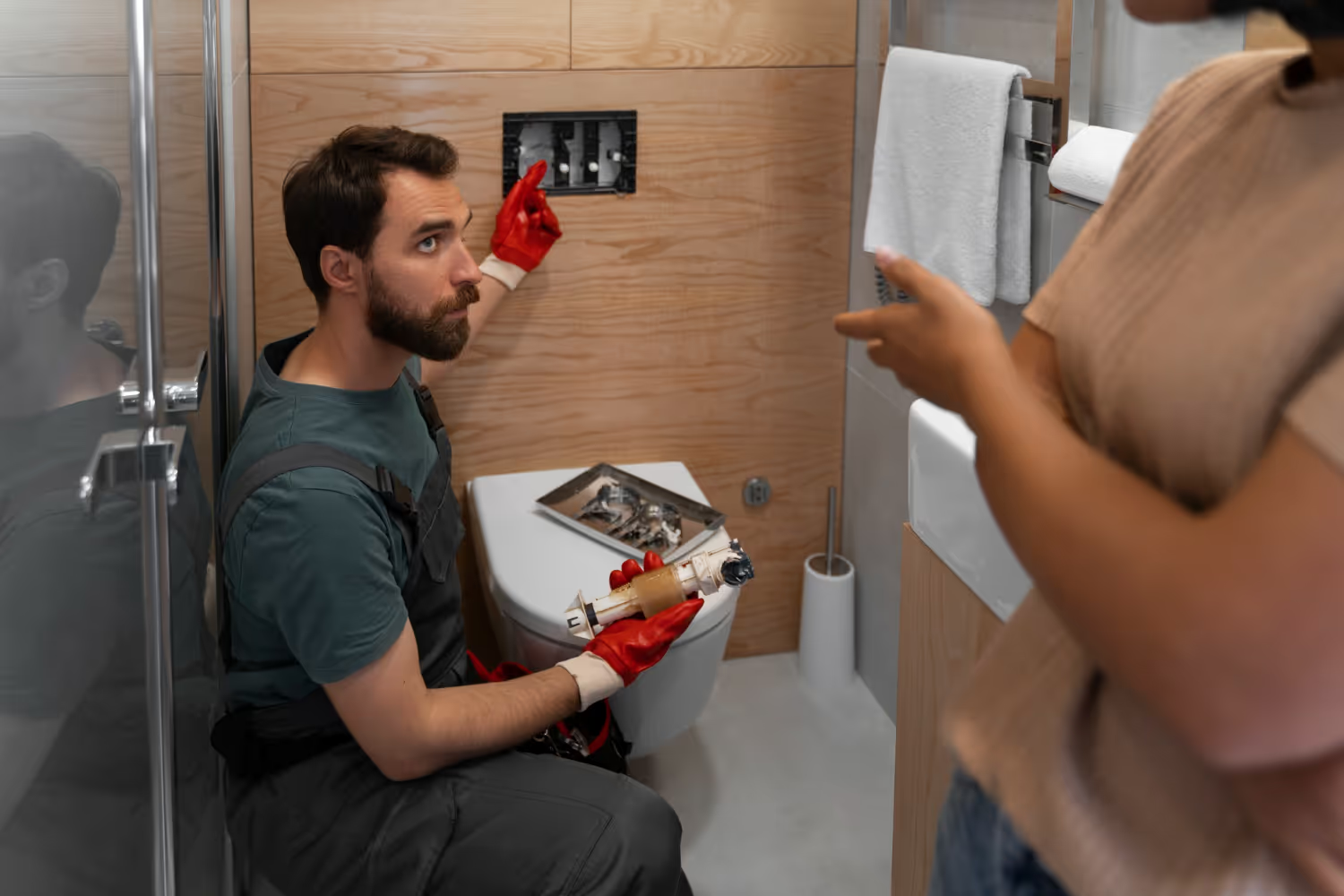
Most toilet complaints trace back to three inexpensive parts: the flapper, the fill valve and the flush handle assembly. All three wear out on a predictable schedule, and none of them mean the toilet needs replacing.
The dye test
This ten-minute test tells you whether the flapper is leaking:
- Add a few drops of food coloring to the tank water.
- Wait ten minutes without flushing.
- Look in the bowl. If the color shows up, the flapper isn't sealing.
A leaking flapper is one of the simplest repairs in plumbing.
Fill valves fail more quietly
A fill valve that sticks or leaks internally often shows up as a faint hiss, or a tank that refills on its own every so often. It won't always show in a dye test.
- The tank refills with nobody flushing
- A hissing sound inside the tank
- Water sitting well above or below the fill line marked inside the tank
If fill valves keep failing within a year, high water pressure may be wearing them out. That's worth checking too.
A wobble is usually bolts, sometimes the seal
A toilet that rocks slightly usually has loose floor bolts. One that rocks and has water at the base has likely failed its wax ring seal. That's still a repair, not a replacement, but don't leave it, because the water is going into the subfloor. Our toilet seal replacement guide covers the signs.
When repairs stop making sense
Any crack in the bowl or tank
Porcelain doesn't flex. A hairline crack only gets worse with daily use, and there's no patch that safely holds under full water pressure. A crack, even one that isn't leaking yet, means replacement.
- A visible crack anywhere on the bowl or tank
- Water on the floor with no clear source
- A tank that was patched before and is leaking again
The same fix keeps failing
If a new flapper still leaks within a few months, the flush valve seat may be rough or pitted, so no flapper can seal. Mineral buildup from well water or harder water can also wear rubber parts faster. A plumber can tell if the seat can be fixed, or if new parts won't help a toilet that's done. See how mineral buildup affects plumbing.
Age
Toilets made before 1994, when the federal 1.6 gallons-per-flush standard took effect, use more water per flush and often have brittle parts that no longer seal well. Once a toilet is in that age range and needing regular repairs, replacement usually makes more financial sense.
Soft floor around the base
A spongy floor or a musty smell around the toilet means a seal has been leaking for a long time. The toilet may be fine, but the floor under it needs checking before a new seal or a new toilet goes on.
Running toilets cost more than you'd think
According to the EPA WaterSense program, toilets are the largest source of indoor water use in the average home, at nearly 30 percent. A toilet that runs on and off sends water straight down the drain all day. Our guide to running toilet causes and fixes walks through each cause in detail.
A toilet that won't clear is a different problem from one that runs. Clogs point to a blockage in the trap or the drain line, not the tank. See clogged toilet repair.
What replacing a toilet involves
Match the rough-in first
The rough-in is the distance from the finished wall to the center of the floor drain. Most homes use 12 inches, but some older homes have 10 or 14 inches, which limits which toilets will fit.
- Measure from the wall (not the baseboard) to the center of the floor bolts.
- Check that against the specs of any toilet you're considering.
- Make sure the new base clears nearby cabinets, walls and trim.
Low-flow isn't weak anymore
Early low-flow toilets earned a bad reputation. Current WaterSense labeled models are tested for flush performance and use less water than older toilets.
A same-day swap
A standard replacement means shutting off the supply, removing the old toilet, checking the flange, setting the new toilet on a fresh seal, reconnecting and testing for leaks. Where the floor is sound, it's usually done in one visit.
Get a straight answer
We'd rather replace a flapper than sell you a toilet you don't need. Our fixture repair and replacement team handles both, and our toilet and faucet repair page covers common jobs. We serve Lexington, Irmo, Columbia and the rest of the Midlands, and Plumb Perfect Club members get member discounts on repairs.
Toilet repair vs. replacement FAQs
How long does a toilet last?
The porcelain can last decades. The parts inside the tank wear out much sooner and are replaceable. Replacement makes sense when the porcelain cracks or repairs become frequent.
Can a cracked toilet tank be repaired?
No safe long-term repair exists for cracked porcelain. Replace the tank or the toilet.
Why does my new flapper still leak?
Usually a worn flush valve seat, the wrong flapper model, or a chain that's too tight. A plumber can check the seat.
Is a wobbly toilet dangerous?
Not immediately, but a rocking toilet can break its seal and leak into the floor. Tighten or reset it soon.
Dealing with a toilet problem in the Lexington area? Call Dr Rooter Lexington at (803) 761-9935.